 Dansk
Dansk


Alfred Chaston Chapman
(forfatter)
,
Mary Ann Spiegel
(indlæser)
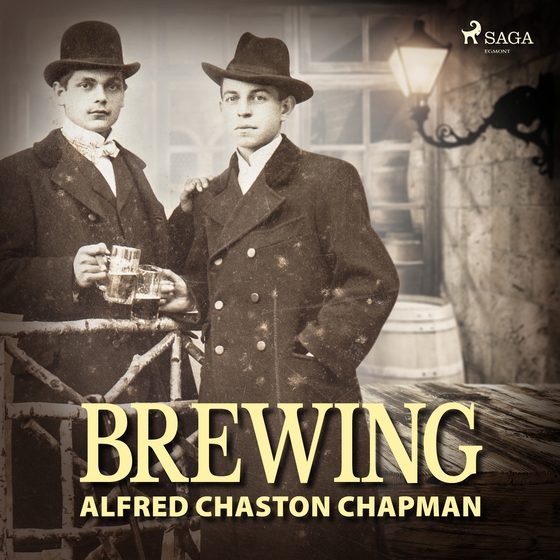
Brewing (World Classics) lydbog
55,56 DKK
The brewing of beer is regarded by many as a more or less mechanical operation, yet there is much more to it. Great is its debt of gratitude to the labours of scientific men. The aim of this work is therefore to show the number of scientific investigations of the first order of importance, which have given rise to the brewing industry.
Alfred Chaston Chapman (1869-1932) was a British chemist, …
The brewing of beer is regarded by many as a more or less mechanical operation, yet there is much more to it. Great is its debt of gratitude to the labours of scientific men. The aim of this work is therefore to show the number of scientific investigations of the first order of importance, which have given rise to the brewing industry.
Alfred Chaston Chapman (1869-1932) was a British chemist, whose work was especially focused on brewing and fermentation. In 1920, he was elected into the Royal Society. Throughout his career, he was sought after by many institutions, spending time working both at the University of London, of Leeds, and at the Royal Microscopioal Society, amongst many others. He is most commonly remembered today for his book "Brewing".
Lydbog
55,56 DKK
Forlag
SAGA Egmont
Udgivet
14.10.2020
Længde
2:53
Genrer
Beers and ciders
Serie
World Classics
Sprog
English
Format
mp3
Beskyttelse
Vandmærket
ISBN
9788726471861
The brewing of beer is regarded by many as a more or less mechanical operation, yet there is much more to it. Great is its debt of gratitude to the labours of scientific men. The aim of this work is therefore to show the number of scientific investigations of the first order of importance, which have given rise to the brewing industry.
Alfred Chaston Chapman (1869-1932) was a British chemist, whose work was especially focused on brewing and fermentation. In 1920, he was elected into the Royal Society. Throughout his career, he was sought after by many institutions, spending time working both at the University of London, of Leeds, and at the Royal Microscopioal Society, amongst many others. He is most commonly remembered today for his book "Brewing".