 Dansk
Dansk


Reilly, Lisa
(forfatter)
Invention of Norman Visual Culture e-bog
25,00 DKK
In this book, Lisa Reilly establishes a new interpretive paradigm for the eleventh and twelfth-century art and architecture of the Norman world in France, England, and Sicily. Traditionally, scholars have considered iconic works like the Cappella Palatina and the Bayeux Embroidery in a geographically piecemeal fashion that prevents us from seeing their full significance. Here, Reilly examines the…
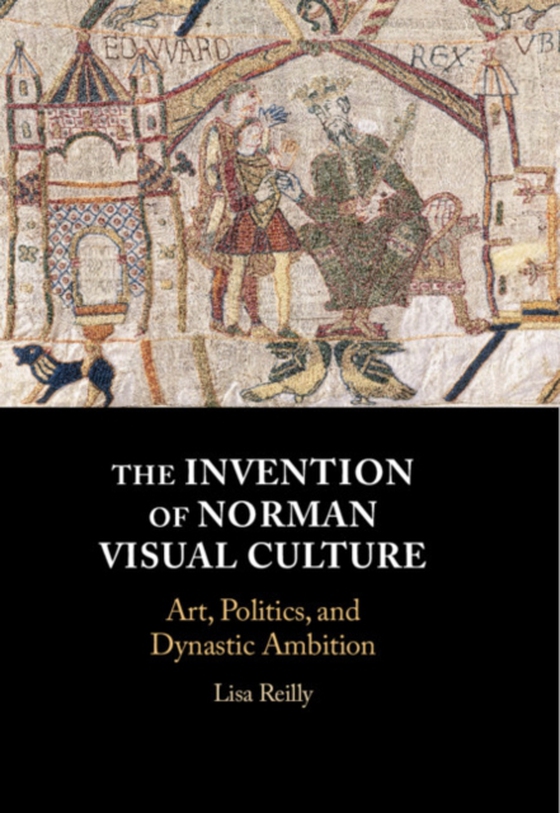
In this book, Lisa Reilly establishes a new interpretive paradigm for the eleventh and twelfth-century art and architecture of the Norman world in France, England, and Sicily. Traditionally, scholars have considered iconic works like the Cappella Palatina and the Bayeux Embroidery in a geographically piecemeal fashion that prevents us from seeing their full significance. Here, Reilly examines these works individually and within the larger context of a connected Norman world. Just as Rollo founded the Normandy 'of different nationalities', the Normans created a visual culture that relied on an assemblage of forms. To the modern eye, these works are perceived as culturally diverse. As Reilly demonstrates, the multiple sources for Norman visual culture served to expand their meaning. Norman artworks represented the cultural mix of each locale, and the triumph of Norman rule, not just as a military victory but as a legitimate succession, and often as the return of true Christian rule.
E-bog
25,00 DKK
Forlag
Cambridge University Press
Udgivet
12.02.2020
Genrer
1D
Sprog
English
Format
pdf
Beskyttelse
LCP
ISBN
9781108857604
In this book, Lisa Reilly establishes a new interpretive paradigm for the eleventh and twelfth-century art and architecture of the Norman world in France, England, and Sicily. Traditionally, scholars have considered iconic works like the Cappella Palatina and the Bayeux Embroidery in a geographically piecemeal fashion that prevents us from seeing their full significance. Here, Reilly examines these works individually and within the larger context of a connected Norman world. Just as Rollo founded the Normandy 'of different nationalities', the Normans created a visual culture that relied on an assemblage of forms. To the modern eye, these works are perceived as culturally diverse. As Reilly demonstrates, the multiple sources for Norman visual culture served to expand their meaning. Norman artworks represented the cultural mix of each locale, and the triumph of Norman rule, not just as a military victory but as a legitimate succession, and often as the return of true Christian rule.