 Dansk
Dansk


Molander, Per
(redaktør)
Alternatives for Welfare Policy e-bog
948,41 DKK
Demographic change and increasingly international markets are putting severe pressure on developed welfare states in the OECD countries. The contributors to this book assess the magnitude of these challenges and discuss in depth, and in concrete terms, what policy options are open to meet them. Looking at public service production, social insurance, tax policy and debt policy, they examine the ma…
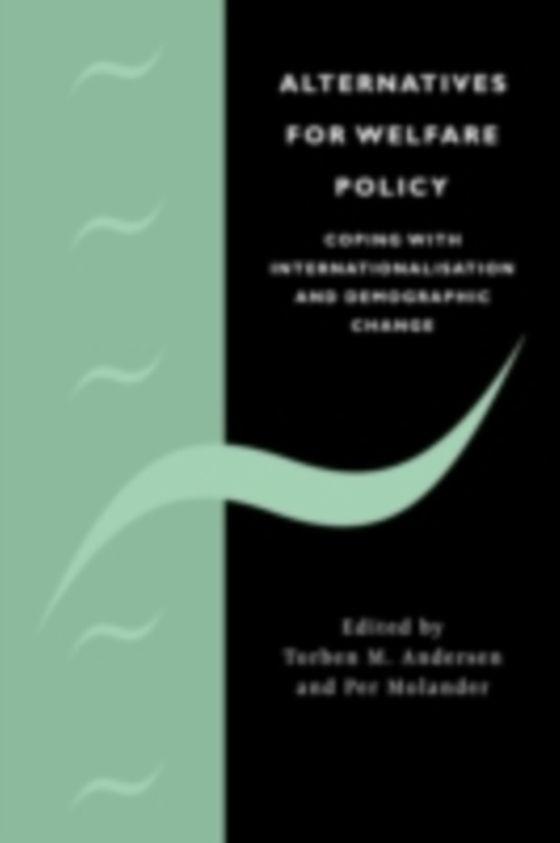
Demographic change and increasingly international markets are putting severe pressure on developed welfare states in the OECD countries. The contributors to this book assess the magnitude of these challenges and discuss in depth, and in concrete terms, what policy options are open to meet them. Looking at public service production, social insurance, tax policy and debt policy, they examine the main costs and benefits associated with an extensive welfare state and ask whether the same objectives can be reached with a welfare regime that is less costly. They also discuss whether the organization of the welfare state is capable of meeting future challenges facing a changing society. This rigorous analysis draws on empirical material from OECD countries with a focus on the Scandinavian countries.
E-bog
948,41 DKK
Forlag
Cambridge University Press
Udgivet
02.12.2004
Genrer
1DN
Sprog
English
Format
pdf
Beskyttelse
LCP
ISBN
9780511058516
Demographic change and increasingly international markets are putting severe pressure on developed welfare states in the OECD countries. The contributors to this book assess the magnitude of these challenges and discuss in depth, and in concrete terms, what policy options are open to meet them. Looking at public service production, social insurance, tax policy and debt policy, they examine the main costs and benefits associated with an extensive welfare state and ask whether the same objectives can be reached with a welfare regime that is less costly. They also discuss whether the organization of the welfare state is capable of meeting future challenges facing a changing society. This rigorous analysis draws on empirical material from OECD countries with a focus on the Scandinavian countries.