 Dansk
Dansk


Oldfield, Jonathan D.
(forfatter)
Soviet Union and Global Environmental Change e-bog
329,95 DKK
This book argues that the Soviet Union was a highly influential actor in furthering understandings of society-nature interaction on the international stage and played a key role in helping to shape, conceptualize and assess the relationship between humankind and the Earth system. It considers how humankind's capacity to affect physical and biological systems at a global scale was acknowledged and…
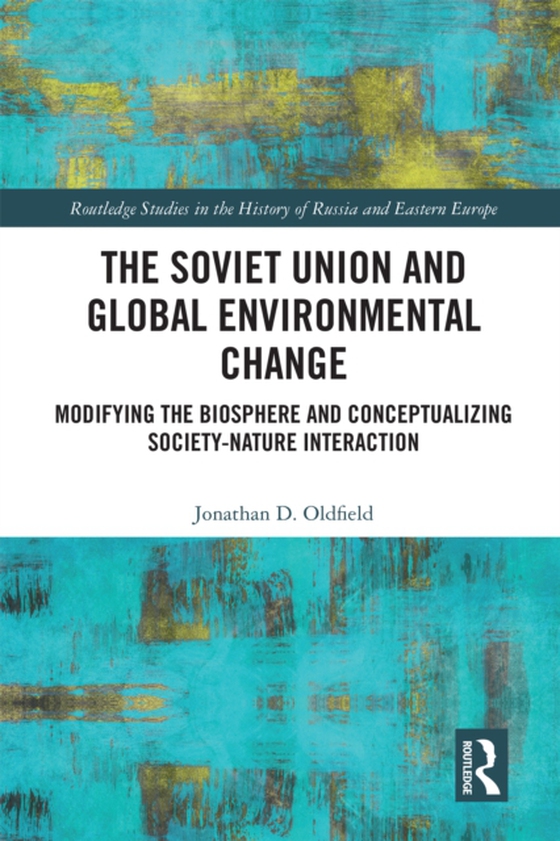
This book argues that the Soviet Union was a highly influential actor in furthering understandings of society-nature interaction on the international stage and played a key role in helping to shape, conceptualize and assess the relationship between humankind and the Earth system. It considers how humankind's capacity to affect physical and biological systems at a global scale was acknowledged and studied by Soviet scientists, discusses how the interaction between Soviet and Western scientists stimulated the development of new technologies and insights, which simultaneously facilitated a more profound understanding of the Earth's physical and biological systems, and explores how Soviet scientists drew upon pre-revolutionary intellectual traditions in order to make sense of society-nature interaction and did so in collaboration with a range of international initiatives. Overall, the book provides a deep analysis of how Soviet scientists conceptualized society-nature interaction and influenced the understanding of global physical and biological systems. Furthermore, it is argued that this intellectual legacy remains of importance today with respect to the activities of Russian science and contemporary global environmental challenges.
E-bog
329,95 DKK
Forlag
Routledge
Udgivet
26.05.2021
Længde
142 sider
Genrer
1DVU
Sprog
English
Format
epub
Beskyttelse
LCP
ISBN
9781000393347
This book argues that the Soviet Union was a highly influential actor in furthering understandings of society-nature interaction on the international stage and played a key role in helping to shape, conceptualize and assess the relationship between humankind and the Earth system. It considers how humankind's capacity to affect physical and biological systems at a global scale was acknowledged and studied by Soviet scientists, discusses how the interaction between Soviet and Western scientists stimulated the development of new technologies and insights, which simultaneously facilitated a more profound understanding of the Earth's physical and biological systems, and explores how Soviet scientists drew upon pre-revolutionary intellectual traditions in order to make sense of society-nature interaction and did so in collaboration with a range of international initiatives. Overall, the book provides a deep analysis of how Soviet scientists conceptualized society-nature interaction and influenced the understanding of global physical and biological systems. Furthermore, it is argued that this intellectual legacy remains of importance today with respect to the activities of Russian science and contemporary global environmental challenges.