 Dansk
Dansk


Postgate, Nicholas
(forfatter)
Bronze Age Bureaucracy e-bog
238,03 DKK
This book describes ten different government archives of cuneiform tablets from Assyria, using them to analyze the social and economic character of the Middle Assyrian state, as well as the roles and practices of writing. The tablets, many of which have not been edited or translated, were excavated at the capital, Assur, and in the provinces, and they give vivid details to illuminate issues such …
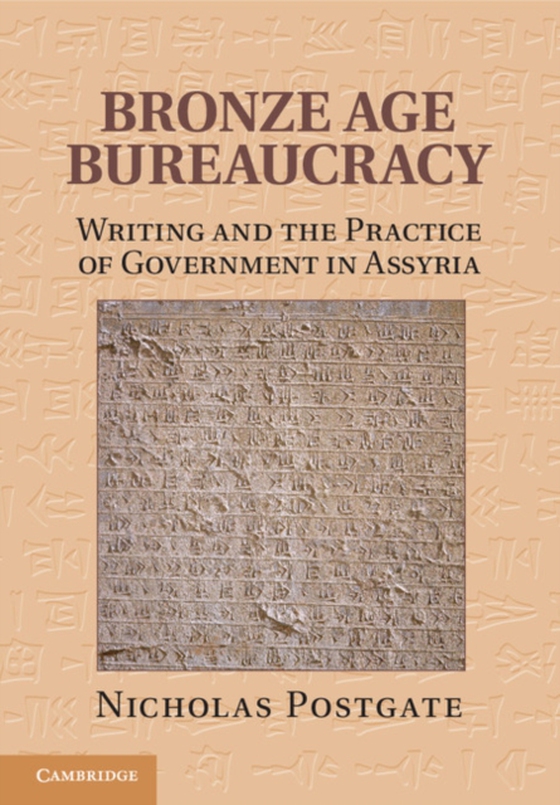
This book describes ten different government archives of cuneiform tablets from Assyria, using them to analyze the social and economic character of the Middle Assyrian state, as well as the roles and practices of writing. The tablets, many of which have not been edited or translated, were excavated at the capital, Assur, and in the provinces, and they give vivid details to illuminate issues such as offerings to the national shrine, the economy and political role of elite households, palace etiquette, and state-run agriculture. This book concentrates particularly on how the Assyrian use of written documentation affected the nature and ethos of government, and compares this to contemporary practices in other palatial administrations at Nuzi, Alalah, Ugarit, and in Greece.
E-bog
238,03 DKK
Forlag
Cambridge University Press
Genrer
1FB
Sprog
English
Format
pdf
Beskyttelse
LCP
ISBN
9781107497450
This book describes ten different government archives of cuneiform tablets from Assyria, using them to analyze the social and economic character of the Middle Assyrian state, as well as the roles and practices of writing. The tablets, many of which have not been edited or translated, were excavated at the capital, Assur, and in the provinces, and they give vivid details to illuminate issues such as offerings to the national shrine, the economy and political role of elite households, palace etiquette, and state-run agriculture. This book concentrates particularly on how the Assyrian use of written documentation affected the nature and ethos of government, and compares this to contemporary practices in other palatial administrations at Nuzi, Alalah, Ugarit, and in Greece.