 Dansk
Dansk


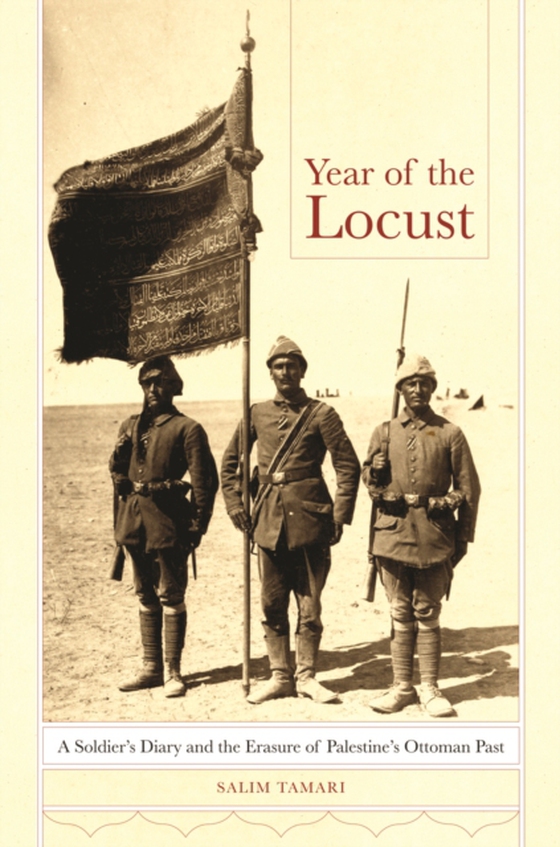
Turjman, Ihsan Salih
(forfatter)
Year of the Locust e-bog
245,52 DKK
Year of the Locust captures in page-turning detail the end of the Ottoman world and a pivotal moment in Palestinian history. In the diaries of Ihsan Hasan al-Turjman (1893-1917), the first ordinary recruit to describe World War I from the Arab side, we follow the misadventures of an Ottoman soldier stationed in Jerusalem. There he occupied himself by dreaming about his future and using family con…
Year of the Locust captures in page-turning detail the end of the Ottoman world and a pivotal moment in Palestinian history. In the diaries of Ihsan Hasan al-Turjman (1893-1917), the first ordinary recruit to describe World War I from the Arab side, we follow the misadventures of an Ottoman soldier stationed in Jerusalem. There he occupied himself by dreaming about his future and using family connections to avoid being sent to the Suez. His diaries draw a unique picture of daily life in the besieged city, bringing into sharp focus its communitarian alleys and obliterated neighborhoods, the ongoing political debates, and, most vividly, the voices from its streets-soldiers, peddlers, prostitutes, and vagabonds. Salim Tamari's indispensable introduction places the diary in its local, regional, and imperial contexts while deftly revising conventional wisdom on the disintegration of the Ottoman Empire.
E-bog
245,52 DKK
Udgivet
01.09.2011
Længde
208 sider
Genrer
1FBP
Sprog
English
Format
epub
Beskyttelse
LCP
ISBN
9780520948785
Year of the Locust captures in page-turning detail the end of the Ottoman world and a pivotal moment in Palestinian history. In the diaries of Ihsan Hasan al-Turjman (1893-1917), the first ordinary recruit to describe World War I from the Arab side, we follow the misadventures of an Ottoman soldier stationed in Jerusalem. There he occupied himself by dreaming about his future and using family connections to avoid being sent to the Suez. His diaries draw a unique picture of daily life in the besieged city, bringing into sharp focus its communitarian alleys and obliterated neighborhoods, the ongoing political debates, and, most vividly, the voices from its streets-soldiers, peddlers, prostitutes, and vagabonds. Salim Tamari's indispensable introduction places the diary in its local, regional, and imperial contexts while deftly revising conventional wisdom on the disintegration of the Ottoman Empire.