 Dansk
Dansk


Ueno, Masamichi
(redaktør)
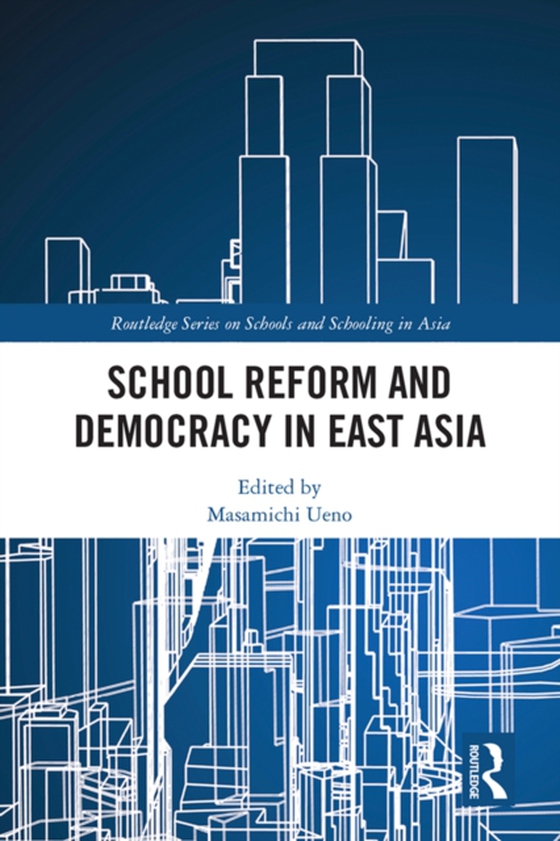
School Reform and Democracy in East Asia e-bog
348,37 DKK
This book discusses how East Asia has introduced school and curricular reform to reflect democratic citizenship and globalized skills, knowledge, dispositions, and competencies in the 21st century. It also focuses on the tendencies and reasons students from Japan, China, South Korea, Taiwan, and Singapore receive the highest scores in international students' assessment such as PISA and TIMSS; yet…
This book discusses how East Asia has introduced school and curricular reform to reflect democratic citizenship and globalized skills, knowledge, dispositions, and competencies in the 21st century. It also focuses on the tendencies and reasons students from Japan, China, South Korea, Taiwan, and Singapore receive the highest scores in international students' assessment such as PISA and TIMSS; yet their curiosity and motivation for learning are the lowest internationally. Moreover, Indonesian and Vietnamese students are likely to receive the lowest testing scores, yet their motivation for learning is quite high. It is worth investigating high academic achievement in East Asia in light of the trend towards democratization. The authors consider controversial issues such as whether the goals of democratic education should be the attainment of high academic scores, consideration of whether to implement competency-based curriculums or meritocratic systems of academic competition, and the provision of equal opportunities in the community of learning. The book illuminates each country's struggle to realise school reform on the basis of its social and cultural settings, and looks at what connects East Asia's past, present, and future.
E-bog
348,37 DKK
Forlag
Routledge
Udgivet
01.10.2020
Længde
180 sider
Genrer
1FP
Sprog
English
Format
epub
Beskyttelse
LCP
ISBN
9780429794384
This book discusses how East Asia has introduced school and curricular reform to reflect democratic citizenship and globalized skills, knowledge, dispositions, and competencies in the 21st century. It also focuses on the tendencies and reasons students from Japan, China, South Korea, Taiwan, and Singapore receive the highest scores in international students' assessment such as PISA and TIMSS; yet their curiosity and motivation for learning are the lowest internationally. Moreover, Indonesian and Vietnamese students are likely to receive the lowest testing scores, yet their motivation for learning is quite high. It is worth investigating high academic achievement in East Asia in light of the trend towards democratization. The authors consider controversial issues such as whether the goals of democratic education should be the attainment of high academic scores, consideration of whether to implement competency-based curriculums or meritocratic systems of academic competition, and the provision of equal opportunities in the community of learning. The book illuminates each country's struggle to realise school reform on the basis of its social and cultural settings, and looks at what connects East Asia's past, present, and future.