 Dansk
Dansk


Conant, Jonathan
(forfatter)
Staying Roman e-bog
729,17 DKK
What did it mean to be Roman once the Roman Empire had collapsed in the West? Staying Roman examines Roman identities in the region of modern Tunisia and Algeria between the fifth-century Vandal conquest and the seventh-century Islamic invasions. Using historical, archaeological and epigraphic evidence, this study argues that the fracturing of the empire's political unity also led to a fracturing…
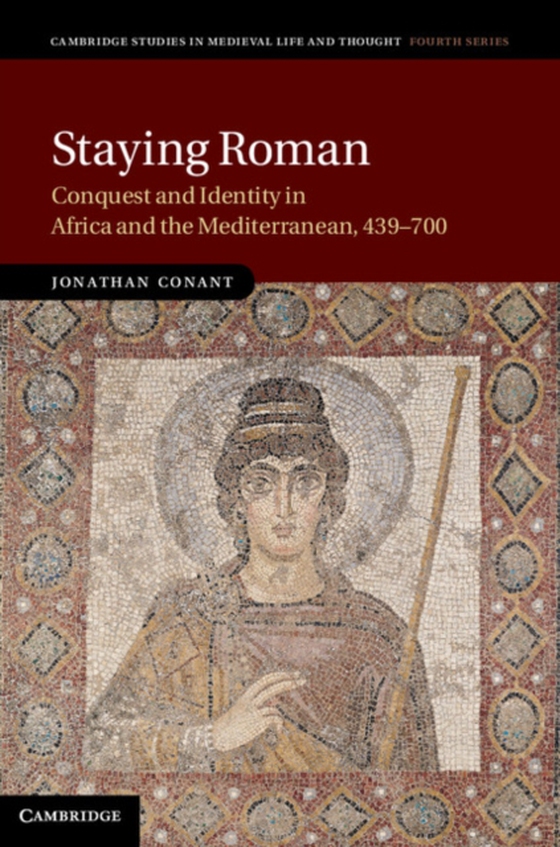
What did it mean to be Roman once the Roman Empire had collapsed in the West? Staying Roman examines Roman identities in the region of modern Tunisia and Algeria between the fifth-century Vandal conquest and the seventh-century Islamic invasions. Using historical, archaeological and epigraphic evidence, this study argues that the fracturing of the empire's political unity also led to a fracturing of Roman identity along political, cultural and religious lines, as individuals who continued to feel 'Roman' but who were no longer living under imperial rule sought to redefine what it was that connected them to their fellow Romans elsewhere. The resulting definitions of Romanness could overlap, but were not always mutually reinforcing. Significantly, in late antiquity Romanness had a practical value, and could be used in remarkably flexible ways to foster a sense of similarity or difference over space, time and ethnicity, in a wide variety of circumstances.
E-bog
729,17 DKK
Forlag
Cambridge University Press
Udgivet
22.06.2012
Genrer
1HBA
Sprog
English
Format
pdf
Beskyttelse
LCP
ISBN
9781139334617
What did it mean to be Roman once the Roman Empire had collapsed in the West? Staying Roman examines Roman identities in the region of modern Tunisia and Algeria between the fifth-century Vandal conquest and the seventh-century Islamic invasions. Using historical, archaeological and epigraphic evidence, this study argues that the fracturing of the empire's political unity also led to a fracturing of Roman identity along political, cultural and religious lines, as individuals who continued to feel 'Roman' but who were no longer living under imperial rule sought to redefine what it was that connected them to their fellow Romans elsewhere. The resulting definitions of Romanness could overlap, but were not always mutually reinforcing. Significantly, in late antiquity Romanness had a practical value, and could be used in remarkably flexible ways to foster a sense of similarity or difference over space, time and ethnicity, in a wide variety of circumstances.