 Dansk
Dansk


Scott, Rachel
(forfatter)
Challenge of Political Islam e-bog
245,52 DKK
The rise of political Islam has provoked considerable debate about the compatibility of democracy, tolerance, and pluralism with the Islamist position. As The Challenge of Political Islam reveals, Egyptian Islamists today are more integrated into the political arena than ever, and are voicing a broad spectrum of positions, including a vision of Islamic citizenship more inclusive of non-Muslims. B…
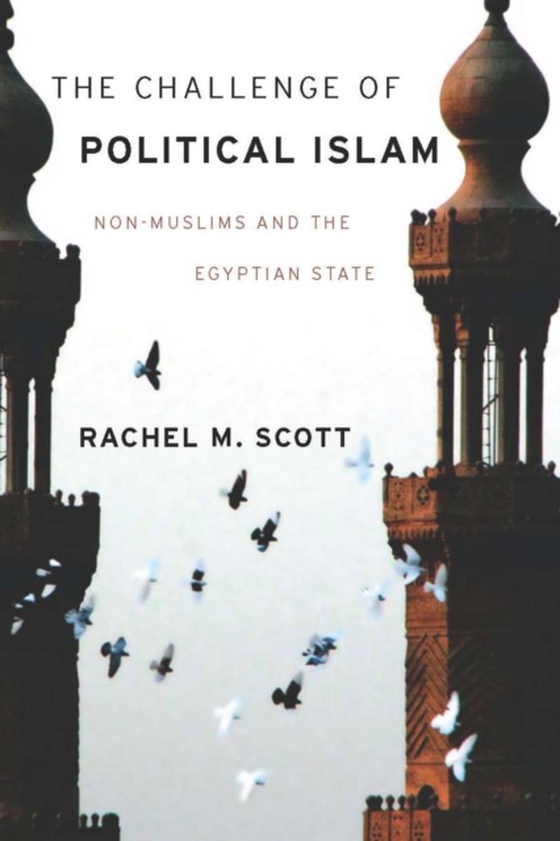
The rise of political Islam has provoked considerable debate about the compatibility of democracy, tolerance, and pluralism with the Islamist position. As The Challenge of Political Islam reveals, Egyptian Islamists today are more integrated into the political arena than ever, and are voicing a broad spectrum of positions, including a vision of Islamic citizenship more inclusive of non-Muslims. Based on Islamist writings, political tracts, and interviews with Islamists-including members of Egypt's Muslim Brotherhood and other important contemporary thinkers-this book looks closely at how modern, politically-oriented Egyptian Islamists perceive non-Muslims in an Islamic state and how non-Muslims respond. Clarifying the movement's aims, this work uncovers how Islamists have responded to the pressures of modernity, the degree to which the movement has been influenced by both a historical Islamic framework and Western modes of political thinking, and the necessity to reconsider the notion that secularism is a precondition for toleration.
E-bog
245,52 DKK
Forlag
Stanford University Press
Udgivet
23.04.2010
Længde
296 sider
Genrer
1HBE
Sprog
English
Format
epub
Beskyttelse
LCP
ISBN
9780804774710
The rise of political Islam has provoked considerable debate about the compatibility of democracy, tolerance, and pluralism with the Islamist position. As The Challenge of Political Islam reveals, Egyptian Islamists today are more integrated into the political arena than ever, and are voicing a broad spectrum of positions, including a vision of Islamic citizenship more inclusive of non-Muslims. Based on Islamist writings, political tracts, and interviews with Islamists-including members of Egypt's Muslim Brotherhood and other important contemporary thinkers-this book looks closely at how modern, politically-oriented Egyptian Islamists perceive non-Muslims in an Islamic state and how non-Muslims respond. Clarifying the movement's aims, this work uncovers how Islamists have responded to the pressures of modernity, the degree to which the movement has been influenced by both a historical Islamic framework and Western modes of political thinking, and the necessity to reconsider the notion that secularism is a precondition for toleration.