 Dansk
Dansk


David Harris, Harris
(forfatter)
Civil War and Democracy in West Africa e-bog
273,24 DKK
In the aftermath of explosive civil wars in Africa during the 1990s and 2000s, the establishment of multi-party elections has often been heralded by the West as signaling the culmination of the conflict and the beginning of a period of democratic rule. However, the outcomes of these elections are very rarely uniform, with just as many countries returning to conflict as not. Here, David Harris use…
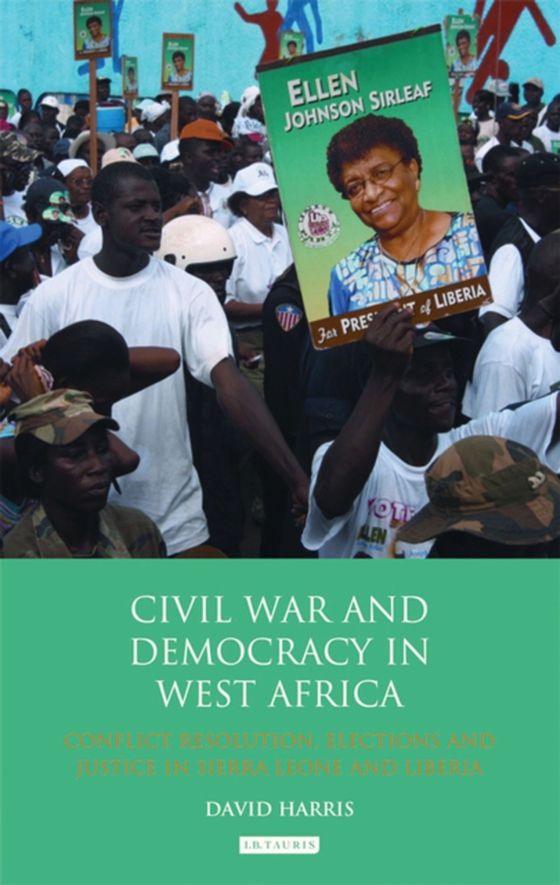
In the aftermath of explosive civil wars in Africa during the 1990s and 2000s, the establishment of multi-party elections has often been heralded by the West as signaling the culmination of the conflict and the beginning of a period of democratic rule. However, the outcomes of these elections are very rarely uniform, with just as many countries returning to conflict as not. Here, David Harris uses the examples of Sierra Leone and Liberia to examine the nexus of international and domestic politics in these post-conflict elections. In doing so, he comes to the conclusion that it is political, rather than legal, solutions that are more likely to enhance any positive political change that has emerged from the violence. This book is thus of significance to Western and African policy makers, and also to students and scholars who wish to engage with the critical issues of conflict resolution and reconciliation both in Sierra Leone and Liberia in particular and in the wider region in general.
E-bog
273,24 DKK
Forlag
I.B. Tauris
Udgivet
13.12.2011
Længde
320 sider
Genrer
1HFDE
Sprog
English
Format
pdf
Beskyttelse
LCP
ISBN
9780857720740
In the aftermath of explosive civil wars in Africa during the 1990s and 2000s, the establishment of multi-party elections has often been heralded by the West as signaling the culmination of the conflict and the beginning of a period of democratic rule. However, the outcomes of these elections are very rarely uniform, with just as many countries returning to conflict as not. Here, David Harris uses the examples of Sierra Leone and Liberia to examine the nexus of international and domestic politics in these post-conflict elections. In doing so, he comes to the conclusion that it is political, rather than legal, solutions that are more likely to enhance any positive political change that has emerged from the violence. This book is thus of significance to Western and African policy makers, and also to students and scholars who wish to engage with the critical issues of conflict resolution and reconciliation both in Sierra Leone and Liberia in particular and in the wider region in general.