 Dansk
Dansk


Chitando, Ezra
(redaktør)
Politics and Religion in Zimbabwe e-bog
348,37 DKK
This book illustrates how religion and ideology were used by Robert Mugabe to ward off opposition within his own party, in Zimbabwe and from the West. An interdisciplinary line up of contributors argue that Mugabe used a calculated narrative of deification - presenting himself as a divine figure who had the task of delivering land, freedom and confidence to black people across the world - to rema…
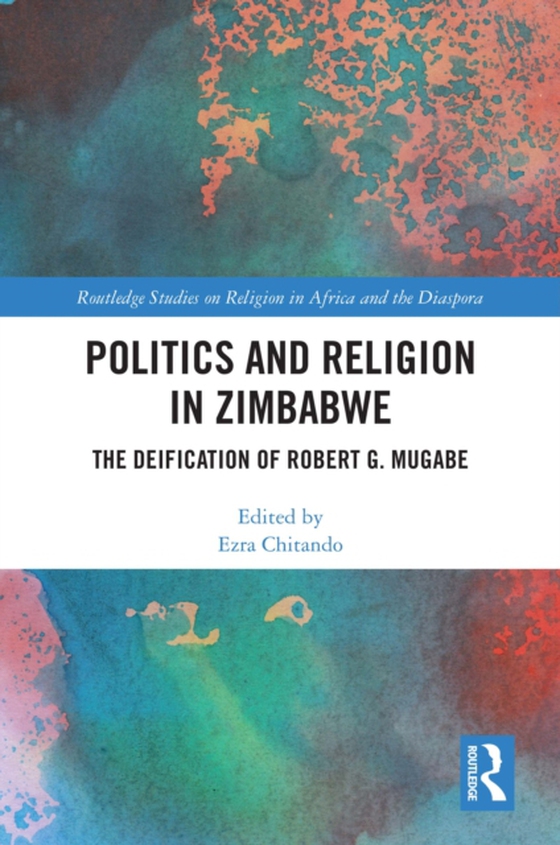
This book illustrates how religion and ideology were used by Robert Mugabe to ward off opposition within his own party, in Zimbabwe and from the West. An interdisciplinary line up of contributors argue that Mugabe used a calculated narrative of deification - presenting himself as a divine figure who had the task of delivering land, freedom and confidence to black people across the world - to remain in power in Zimbabwe. The chapters highlight the appropriation and deployment of religious themes in Mugabe's domestic and international politics, reflect on the contestation around the deification of Mugabe in Zimbabwean politics across different forms of religious expression, including African Traditional Religions and various strands of Christianity and initiate further reflections on the interface between religion and politics in Africa and globally.Politics and Religion in Zimbabwe will be of interest to scholars of religion and politics, Southern Africa and African politics.
E-bog
348,37 DKK
Forlag
Routledge
Udgivet
03.04.2020
Længde
198 sider
Genrer
1HFMW
Sprog
English
Format
pdf
Beskyttelse
LCP
ISBN
9781000039443
This book illustrates how religion and ideology were used by Robert Mugabe to ward off opposition within his own party, in Zimbabwe and from the West. An interdisciplinary line up of contributors argue that Mugabe used a calculated narrative of deification - presenting himself as a divine figure who had the task of delivering land, freedom and confidence to black people across the world - to remain in power in Zimbabwe. The chapters highlight the appropriation and deployment of religious themes in Mugabe's domestic and international politics, reflect on the contestation around the deification of Mugabe in Zimbabwean politics across different forms of religious expression, including African Traditional Religions and various strands of Christianity and initiate further reflections on the interface between religion and politics in Africa and globally.Politics and Religion in Zimbabwe will be of interest to scholars of religion and politics, Southern Africa and African politics.