 Dansk
Dansk


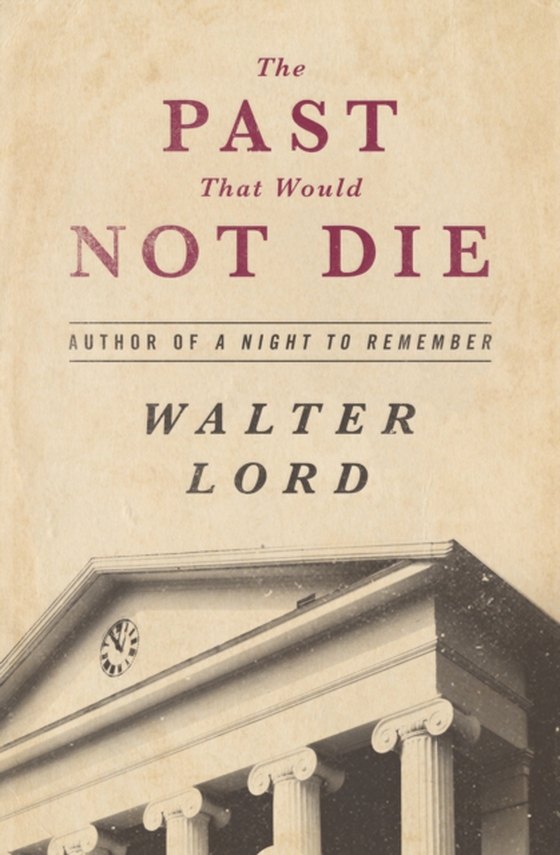
Past That Would Not Die e-bog
159,64 DKK
(ekskl. moms 127,71 DKK)
Lord’s history of the 1962 Ole Miss riots, sparked by one man’s heroic stance against segregation in the American South On September 30, 1962, James H. Meredith matriculated at the University of Mississippi in Oxford. An air force veteran with sixty hours of transfer credits, Meredith would have been welcomed were it not for the color of his skin. As the first African-American st…
Lord’s history of the 1962 Ole Miss riots, sparked by one man’s heroic stance against segregation in the American South On September 30, 1962, James H. Meredith matriculated at the University of Mississippi in Oxford. An air force veteran with sixty hours of transfer credits, Meredith would have been welcomed were it not for the color of his skin. As the first African-American student to register at a previously segregated school, however, he risked his life. The Supreme Court had determined that Oxford’s university must desegregate, and several hundred federal marshals came to support Meredith. It would not be enough. As President Kennedy called for peace, a riot exploded in Oxford. By eleven o’clock that night, the marshals were out of tear gas. By midnight, the highway patrol had pulled out, gunfire was spreading, and Kennedy was forced to send in the army. In this definitive history, Walter Lord argues that the riot was not an isolated incident, but a manifestation of racial hatred that was wrapped up in the state’s identity, stretching all the way back to the Civil War.
E-bog
159,64 DKK
Forlag
Open Road Media
Udgivet
06.03.2012
Genrer
1KBB
Sprog
English
Format
epub
Beskyttelse
LCP
ISBN
9781453238462
Lord’s history of the 1962 Ole Miss riots, sparked by one man’s heroic stance against segregation in the American South On September 30, 1962, James H. Meredith matriculated at the University of Mississippi in Oxford. An air force veteran with sixty hours of transfer credits, Meredith would have been welcomed were it not for the color of his skin. As the first African-American student to register at a previously segregated school, however, he risked his life. The Supreme Court had determined that Oxford’s university must desegregate, and several hundred federal marshals came to support Meredith. It would not be enough. As President Kennedy called for peace, a riot exploded in Oxford. By eleven o’clock that night, the marshals were out of tear gas. By midnight, the highway patrol had pulled out, gunfire was spreading, and Kennedy was forced to send in the army. In this definitive history, Walter Lord argues that the riot was not an isolated incident, but a manifestation of racial hatred that was wrapped up in the state’s identity, stretching all the way back to the Civil War.