 Dansk
Dansk


Hotel Mexico e-bog
403,24 DKK
(ekskl. moms 322,59 DKK)
In 1968, Mexico prepared to host the Olympic games amid growing civil unrest. The spectacular sports facilities and urban redevelopment projects built by the government in Mexico City mirrored the country's rapid but uneven modernization. In the same year, a street-savvy democratization movement led by students emerged in the city. Throughout the summer, the ';68 Movement staged protests undersco…
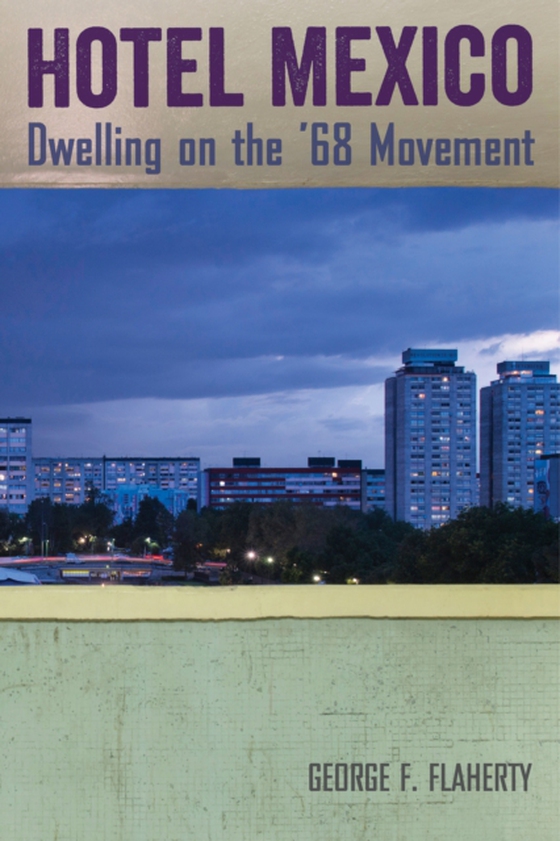
In 1968, Mexico prepared to host the Olympic games amid growing civil unrest. The spectacular sports facilities and urban redevelopment projects built by the government in Mexico City mirrored the country's rapid but uneven modernization. In the same year, a street-savvy democratization movement led by students emerged in the city. Throughout the summer, the ';68 Movement staged protests underscoring a widespread sense of political disenfranchisement. Just ten days before the Olympics began, nearly three hundred student protestors were massacred by the military in a plaza at the core of a new public housing complex. In spite of institutional denial and censorship, the 1968 massacre remains a touchstone in contemporary Mexican culture thanks to the public memory work of survivors and Mexico's leftist intelligentsia. In this highly original study of the afterlives of the '68 Movement, George F. Flaherty explores how urban spacesmaterial but also literary, photographic, and cinematicbecame an archive of 1968, providing a framework for de facto modes of justice for years to come.
E-bog
403,24 DKK
Udgivet
16.08.2016
Længde
336 sider
Genrer
1KLCM
Sprog
English
Format
epub
Beskyttelse
LCP
ISBN
9780520964938
In 1968, Mexico prepared to host the Olympic games amid growing civil unrest. The spectacular sports facilities and urban redevelopment projects built by the government in Mexico City mirrored the country's rapid but uneven modernization. In the same year, a street-savvy democratization movement led by students emerged in the city. Throughout the summer, the ';68 Movement staged protests underscoring a widespread sense of political disenfranchisement. Just ten days before the Olympics began, nearly three hundred student protestors were massacred by the military in a plaza at the core of a new public housing complex. In spite of institutional denial and censorship, the 1968 massacre remains a touchstone in contemporary Mexican culture thanks to the public memory work of survivors and Mexico's leftist intelligentsia. In this highly original study of the afterlives of the '68 Movement, George F. Flaherty explores how urban spacesmaterial but also literary, photographic, and cinematicbecame an archive of 1968, providing a framework for de facto modes of justice for years to come.