 Dansk
Dansk


Haynes, Katharine
(forfatter)
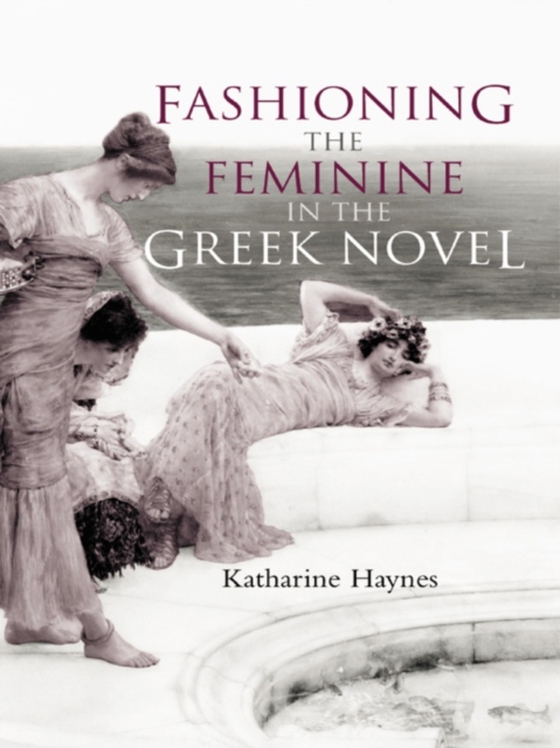
Fashioning the Feminine in the Greek Novel e-bog
329,95 DKK
The Greek novel occupies a special place in the debate on gender in antiquity, forcing us to ask why the female protagonists are such strong and positive characters. This book rejects the hypothesis of a largely female readership, and also sees a problem in ascribing this pattern to the reflection of a blanket improvement in the status of women. Katharine Haynes shows that the strong heroines are…
The Greek novel occupies a special place in the debate on gender in antiquity, forcing us to ask why the female protagonists are such strong and positive characters. This book rejects the hypothesis of a largely female readership, and also sees a problem in ascribing this pattern to the reflection of a blanket improvement in the status of women. Katharine Haynes shows that the strong heroines are best understood not as an undistorted mirror on an improved social reality, but as a type of 'constructed feminine'.The book offers a wealth of fascinating insights into the kaleidoscopic world of male and female in the Greek novel, which will inform and illuminate the reader whatever the text being studied. The related issues of ethnicity and self-definition also explored will be of interest for all those working on ancient fiction or the culture of the Second Sophistic
E-bog
329,95 DKK
Forlag
Routledge
Udgivet
02.09.2003
Længde
224 sider
Genrer
2AHA
Sprog
English
Format
epub
Beskyttelse
LCP
ISBN
9781134505579
The Greek novel occupies a special place in the debate on gender in antiquity, forcing us to ask why the female protagonists are such strong and positive characters. This book rejects the hypothesis of a largely female readership, and also sees a problem in ascribing this pattern to the reflection of a blanket improvement in the status of women. Katharine Haynes shows that the strong heroines are best understood not as an undistorted mirror on an improved social reality, but as a type of 'constructed feminine'.The book offers a wealth of fascinating insights into the kaleidoscopic world of male and female in the Greek novel, which will inform and illuminate the reader whatever the text being studied. The related issues of ethnicity and self-definition also explored will be of interest for all those working on ancient fiction or the culture of the Second Sophistic