 Dansk
Dansk


Summers, Tim
(forfatter)
Queerness of Video Game Music e-bog
165,78 DKK
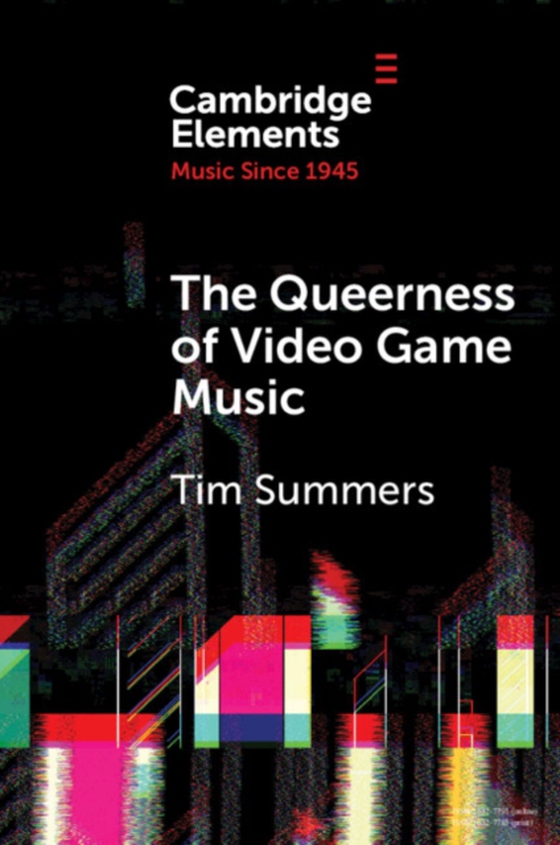
Video game music is a significant site of queerness where normative demands are questioned, suspended or loosened. Games resist hegemonic musical logics, challenge musical value systems and use music to complicate essentialist notions of identity. This Element proposes three areas of queerness, each representing different relationships between 'queer design' and 'queer engagement', ranging fromun…
Video game music is a significant site of queerness where normative demands are questioned, suspended or loosened. Games resist hegemonic musical logics, challenge musical value systems and use music to complicate essentialist notions of identity. This Element proposes three areas of queerness, each representing different relationships between 'queer design' and 'queer engagement', ranging fromunintentionally resistive to explicit engagement with identity. First, this Element examines musical structures that provide queer temporal alternatives to normative linear development, and interactive systems that reframe the power relationship between musical material and listener. Second, it considers 'retro' or 'chiptune' timbres that queer notions of technological progress to be improvements, rejecting chrononormativity. Finally, the Element discusses music that queers the self/other binary of identity. Games present ways of listening to, engaging with and understanding music that provide opportunities to challenge inherited assumptions and reductive or monolithic values, practices and identities.
E-bog
165,78 DKK
Forlag
Cambridge University Press
Udgivet
03.08.2023
Genrer
AFKV
Sprog
English
Format
pdf
Beskyttelse
LCP
ISBN
9781009371391
Video game music is a significant site of queerness where normative demands are questioned, suspended or loosened. Games resist hegemonic musical logics, challenge musical value systems and use music to complicate essentialist notions of identity. This Element proposes three areas of queerness, each representing different relationships between 'queer design' and 'queer engagement', ranging fromunintentionally resistive to explicit engagement with identity. First, this Element examines musical structures that provide queer temporal alternatives to normative linear development, and interactive systems that reframe the power relationship between musical material and listener. Second, it considers 'retro' or 'chiptune' timbres that queer notions of technological progress to be improvements, rejecting chrononormativity. Finally, the Element discusses music that queers the self/other binary of identity. Games present ways of listening to, engaging with and understanding music that provide opportunities to challenge inherited assumptions and reductive or monolithic values, practices and identities.