 Dansk
Dansk


Lunn-Rockliffe, Sophie
(forfatter)
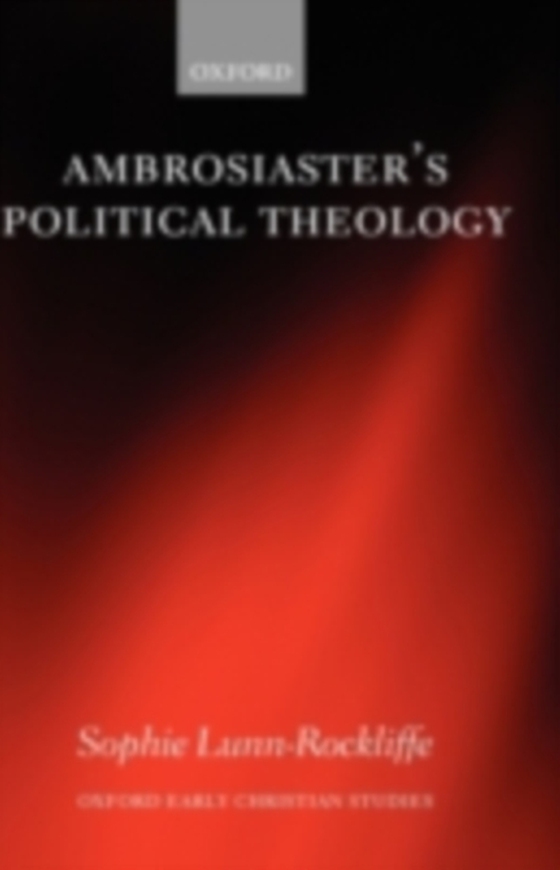
Ambrosiaster's Political Theology e-bog
1021,49 DKK
The works of Ambrosiaster, a Christian writing in Rome in the late fourth century, were influential on his near contemporaries and throughout the Middle Ages. In the first half of her study, Sophie Lunn-Rockliffe addresses the problem of the author's mysterious identity (which scholars have puzzled over for centuries) and places him in a broad historical and intellectual context. In the second ha…
The works of Ambrosiaster, a Christian writing in Rome in the late fourth century, were influential on his near contemporaries and throughout the Middle Ages. In the first half of her study, Sophie Lunn-Rockliffe addresses the problem of the author's mysterious identity (which scholars have puzzled over for centuries) and places him in a broad historical and intellectual context. In the second half she addresses Ambrosiaster's political theology, an idea which hasbeen explored in other late Roman Christian writers but which has never been addressed in his works. She looks at how Ambrosiaster's attitudes to social and political order were formed on the basis of theological concepts and the interpretation of scripture, and shows that he espoused a rigidhierarchical and monarchical organization in the church, society, and the Roman empire. He also traced close connections between the Devil, characterized as a rebel against God, and the earthly tyrants and usurpers who followed his example.
E-bog
1021,49 DKK
Forlag
OUP Oxford
Udgivet
04.10.2007
Genrer
AVGD
Sprog
English
Format
pdf
Beskyttelse
LCP
ISBN
9780191528071
The works of Ambrosiaster, a Christian writing in Rome in the late fourth century, were influential on his near contemporaries and throughout the Middle Ages. In the first half of her study, Sophie Lunn-Rockliffe addresses the problem of the author's mysterious identity (which scholars have puzzled over for centuries) and places him in a broad historical and intellectual context. In the second half she addresses Ambrosiaster's political theology, an idea which hasbeen explored in other late Roman Christian writers but which has never been addressed in his works. She looks at how Ambrosiaster's attitudes to social and political order were formed on the basis of theological concepts and the interpretation of scripture, and shows that he espoused a rigidhierarchical and monarchical organization in the church, society, and the Roman empire. He also traced close connections between the Devil, characterized as a rebel against God, and the earthly tyrants and usurpers who followed his example.