 Dansk
Dansk

McEnery, Tony
(forfatter)
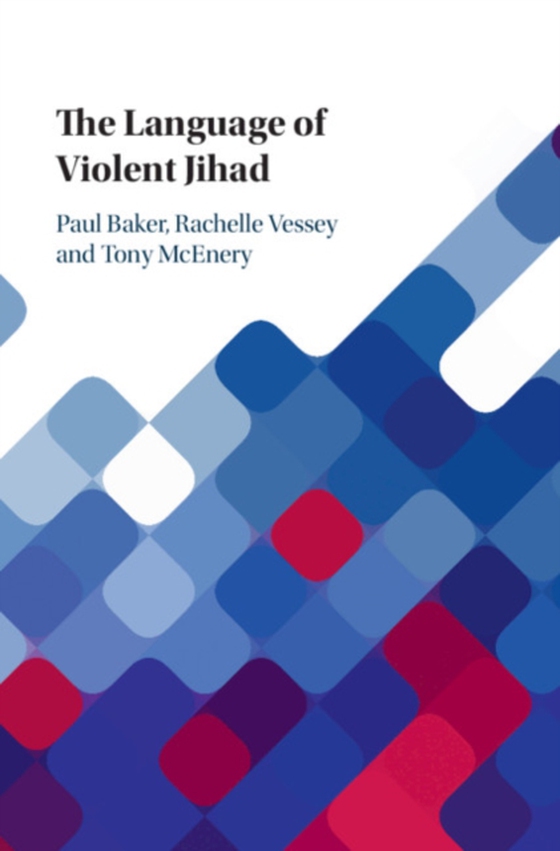
Language of Violent Jihad e-bog
802,25 DKK
How do violent jihadists use language to try to persuade people to carry out violent acts? This book analyses over two million words of texts produced by violent jihadists to identify and examine the linguistic strategies employed. Taking a mixed methods approach, the authors combine quantitative methods from corpus linguistics, which allows the identification of frequent words and phrases, along…
How do violent jihadists use language to try to persuade people to carry out violent acts? This book analyses over two million words of texts produced by violent jihadists to identify and examine the linguistic strategies employed. Taking a mixed methods approach, the authors combine quantitative methods from corpus linguistics, which allows the identification of frequent words and phrases, alongside close reading of texts via discourse analysis. The analysis compares language use across three sets of texts: those which advocate violence, those which take a hostile but non-violent standpoint, and those which take a moderate perspective, identifying the different uses of language associated with different stages of radicalization. The book also discusses how strategies including use of Arabic, romanisation, formal English, quotation, metaphor, dehumanisation and collectivisation are used to create in- and out-groups and justify violence.
E-bog
802,25 DKK
Forlag
Cambridge University Press
Udgivet
13.10.2021
Genrer
Linguistics
Sprog
English
Format
pdf
Beskyttelse
LCP
ISBN
9781108372992
How do violent jihadists use language to try to persuade people to carry out violent acts? This book analyses over two million words of texts produced by violent jihadists to identify and examine the linguistic strategies employed. Taking a mixed methods approach, the authors combine quantitative methods from corpus linguistics, which allows the identification of frequent words and phrases, alongside close reading of texts via discourse analysis. The analysis compares language use across three sets of texts: those which advocate violence, those which take a hostile but non-violent standpoint, and those which take a moderate perspective, identifying the different uses of language associated with different stages of radicalization. The book also discusses how strategies including use of Arabic, romanisation, formal English, quotation, metaphor, dehumanisation and collectivisation are used to create in- and out-groups and justify violence.