 Dansk
Dansk

Fabio Alves
(forfatter)
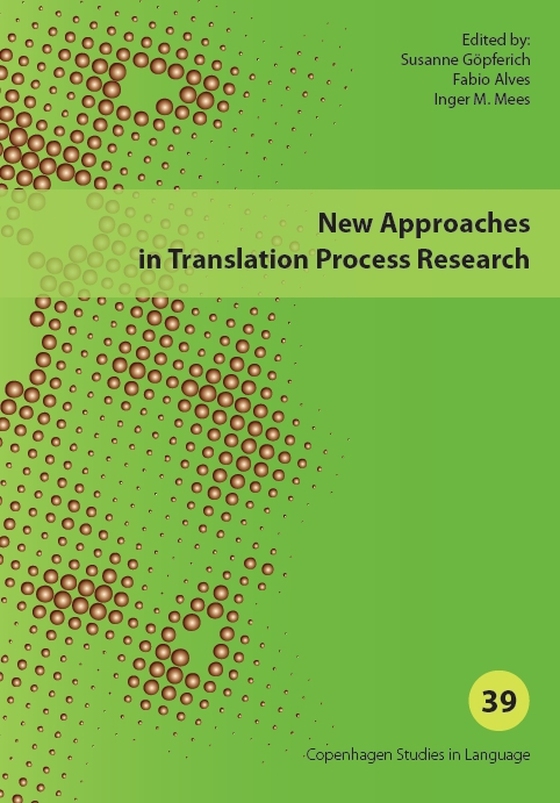
New Approaches in Translation Process Research (Copenhagen Studies in Language #39) e-bog
90,41 DKK
This volume brings together five papers presented at the 1st International Research Workshop “Methodology in Translation Process Research” held from April 6 to 8, 2009, at the University of Graz, Austria.
The first three articles provide insights into the methods employed in the TransComp project at the University of Graz and discuss some of the findings this longitudinal study has yielded so f…
This volume brings together five papers presented at the 1st International Research Workshop “Methodology in Translation Process Research” held from April 6 to 8, 2009, at the University of Graz, Austria.
The first three articles provide insights into the methods employed in the TransComp project at the University of Graz and discuss some of the findings this longitudinal study has yielded so far. The fourth presents results from another longitudinal study, the CTP project (“Capturing Translation Processes”), conducted at Zurich University of Applied Sciences. The collection concludes with a contribution which bridges methodology in translation and interpreting process research
E-bog
90,41 DKK
Forlag
Samfundslitteratur
Udgivet
28.10.2011
Længde
159 sider
Genrer
Translation and interpretation
Nummer i serie
39
Sprog
English
Format
epub
Beskyttelse
LCP
ISBN
9788759397541
This volume brings together five papers presented at the 1st International Research Workshop “Methodology in Translation Process Research” held from April 6 to 8, 2009, at the University of Graz, Austria.
The first three articles provide insights into the methods employed in the TransComp project at the University of Graz and discuss some of the findings this longitudinal study has yielded so far. The fourth presents results from another longitudinal study, the CTP project (“Capturing Translation Processes”), conducted at Zurich University of Applied Sciences. The collection concludes with a contribution which bridges methodology in translation and interpreting process research