 Dansk
Dansk


Acosta-Hughes, Benjamin
(forfatter)
Arion's Lyre e-bog
436,85 DKK
Arion's Lyre examines how Hellenistic poetic culture adapted, reinterpreted, and transformed Archaic Greek lyric through a complex process of textual, cultural, and creative reception. Looking at the ways in which the poetry of Sappho, Alcaeus, Ibycus, Anacreon, and Simonides was preserved, edited, and read by Hellenistic scholars and poets, the book shows that Archaic poets often look very diffe…
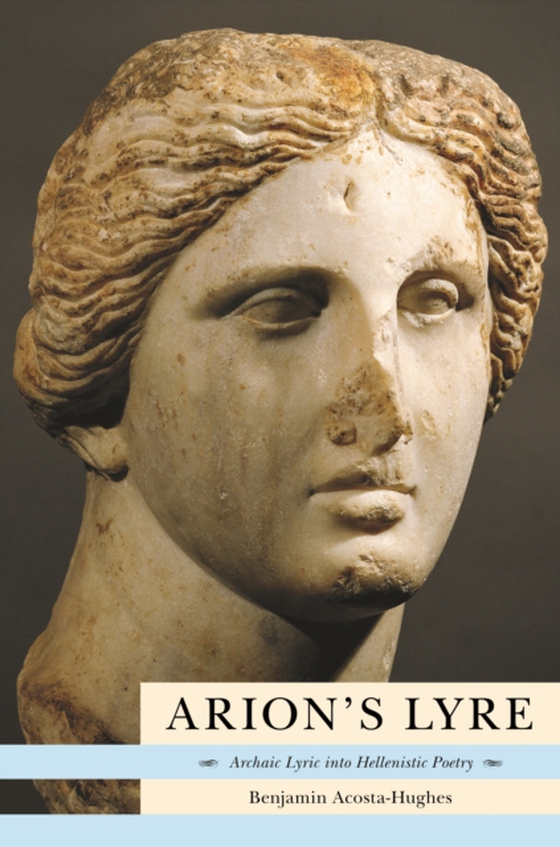
Arion's Lyre examines how Hellenistic poetic culture adapted, reinterpreted, and transformed Archaic Greek lyric through a complex process of textual, cultural, and creative reception. Looking at the ways in which the poetry of Sappho, Alcaeus, Ibycus, Anacreon, and Simonides was preserved, edited, and read by Hellenistic scholars and poets, the book shows that Archaic poets often look very different in the new social, cultural, and political setting of Hellenistic Alexandria. For example, the Alexandrian Sappho evolves from the singer of Archaic Lesbos but has distinct associations and contexts, from Ptolemaic politics and Macedonian queens to the new phenomenon of the poetry book and an Alexandrian scholarship intent on preservation and codification. A study of Hellenistic poetic culture and an interpretation of some of the Archaic poets it so lovingly preserved, Arion's Lyre is also an examination of how one poetic culture reads another--and how modern readings of ancient poetry are filtered and shaped by earlier readings.
E-bog
436,85 DKK
Forlag
Princeton University Press
Udgivet
04.01.2010
Længde
248 sider
Genrer
Ancient, classical and medieval texts
Sprog
English
Format
pdf
Beskyttelse
LCP
ISBN
9781400834891
Arion's Lyre examines how Hellenistic poetic culture adapted, reinterpreted, and transformed Archaic Greek lyric through a complex process of textual, cultural, and creative reception. Looking at the ways in which the poetry of Sappho, Alcaeus, Ibycus, Anacreon, and Simonides was preserved, edited, and read by Hellenistic scholars and poets, the book shows that Archaic poets often look very different in the new social, cultural, and political setting of Hellenistic Alexandria. For example, the Alexandrian Sappho evolves from the singer of Archaic Lesbos but has distinct associations and contexts, from Ptolemaic politics and Macedonian queens to the new phenomenon of the poetry book and an Alexandrian scholarship intent on preservation and codification. A study of Hellenistic poetic culture and an interpretation of some of the Archaic poets it so lovingly preserved, Arion's Lyre is also an examination of how one poetic culture reads another--and how modern readings of ancient poetry are filtered and shaped by earlier readings.