 Dansk
Dansk


Schein, Seth L.
(redaktør)
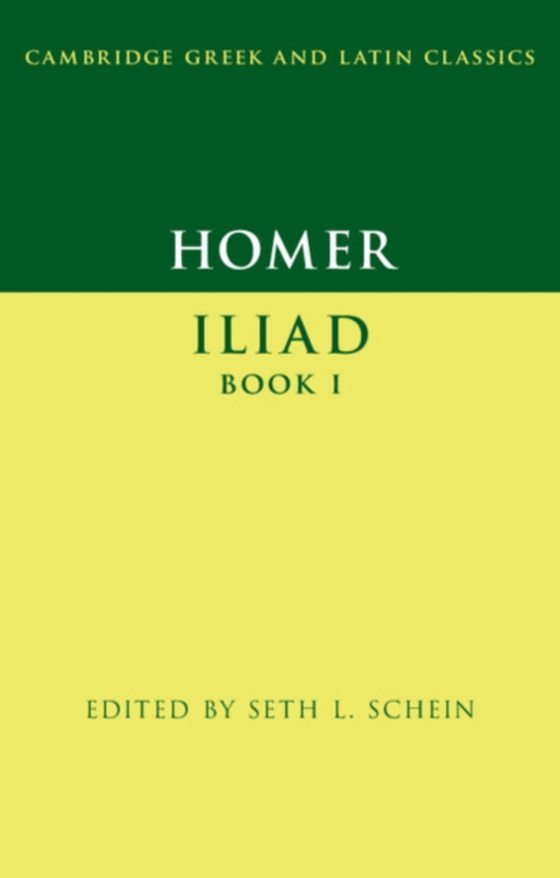
Homer: Iliad Book I e-bog
192,41 DKK
Book I of the Iliad marks the beginning of the first surviving work of Greek literature. This edition with commentary enables readers at all levels to interpret the poetry with heightened pleasure and understanding. It provides help with the morphology, grammar, and syntax of Homeric Greek, situates the poem in its historical and poetic contexts, and elucidates its traditional language, meter, rh…
Book I of the Iliad marks the beginning of the first surviving work of Greek literature. This edition with commentary enables readers at all levels to interpret the poetry with heightened pleasure and understanding. It provides help with the morphology, grammar, and syntax of Homeric Greek, situates the poem in its historical and poetic contexts, and elucidates its traditional language, meter, rhetoric, and style, as well as its distinctive transformation of traditional mythology and narrative motifs in accordance with its own interests, values, and poetic purposes. It also addresses the programmatic contrast in Book I between gods and humans; the characterization of both major and minor figures; and the thematic significance in Book I and the poem generally of the representation of social, cultural, religious, and ethical institutions and values. Fully accessible to undergraduates and graduate students, this edition also contains much of value for the scholar.
E-bog
192,41 DKK
Forlag
Cambridge University Press
Udgivet
22.06.2022
Genrer
Poetry
Sprog
English
Format
pdf
Beskyttelse
LCP
ISBN
9781108351911
Book I of the Iliad marks the beginning of the first surviving work of Greek literature. This edition with commentary enables readers at all levels to interpret the poetry with heightened pleasure and understanding. It provides help with the morphology, grammar, and syntax of Homeric Greek, situates the poem in its historical and poetic contexts, and elucidates its traditional language, meter, rhetoric, and style, as well as its distinctive transformation of traditional mythology and narrative motifs in accordance with its own interests, values, and poetic purposes. It also addresses the programmatic contrast in Book I between gods and humans; the characterization of both major and minor figures; and the thematic significance in Book I and the poem generally of the representation of social, cultural, religious, and ethical institutions and values. Fully accessible to undergraduates and graduate students, this edition also contains much of value for the scholar.