 Dansk
Dansk


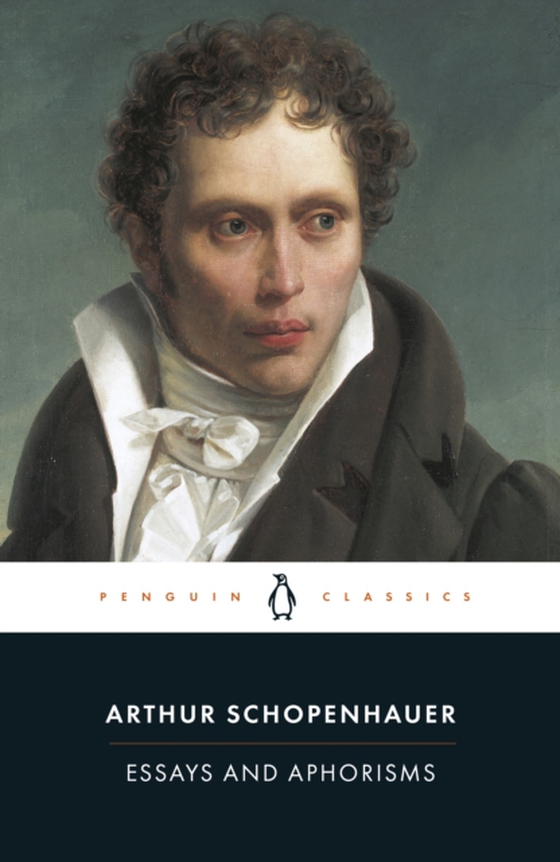
Schopenhauer, Arthur
(forfatter)
Essays and Aphorisms e-bog
90,41 DKK
One of the greatest philosophers of the nineteenth century, Schopenhauer (1788-1860) believed that human action is determined not by reason but by 'will' - the blind and irrational desire for physical existence. This selection of his writings on religion, ethics, politics, women, suicide, books and many other themes is taken from Schopenhauer's last work, Parerga and Paralipomena, which he publis…
One of the greatest philosophers of the nineteenth century, Schopenhauer (1788-1860) believed that human action is determined not by reason but by 'will' - the blind and irrational desire for physical existence. This selection of his writings on religion, ethics, politics, women, suicide, books and many other themes is taken from Schopenhauer's last work, Parerga and Paralipomena, which he published in 1851. These pieces depict humanity as locked in a struggle beyond good and evil, and each individual absolutely free within a Godless world, in which art, morality and self-awareness are our only salvation. This innovative - and pessimistic - view has proved powerfully influential upon philosophy and art, directly affecting the work of Nietzsche, Wittgenstein and Wagner among others.
E-bog
90,41 DKK
Forlag
Penguin
Udgivet
26.08.2004
Længde
256 sider
Genrer
Literary essays
Sprog
English
Format
epub
Beskyttelse
LCP
ISBN
9780141921754
One of the greatest philosophers of the nineteenth century, Schopenhauer (1788-1860) believed that human action is determined not by reason but by 'will' - the blind and irrational desire for physical existence. This selection of his writings on religion, ethics, politics, women, suicide, books and many other themes is taken from Schopenhauer's last work, Parerga and Paralipomena, which he published in 1851. These pieces depict humanity as locked in a struggle beyond good and evil, and each individual absolutely free within a Godless world, in which art, morality and self-awareness are our only salvation. This innovative - and pessimistic - view has proved powerfully influential upon philosophy and art, directly affecting the work of Nietzsche, Wittgenstein and Wagner among others.