 Dansk
Dansk


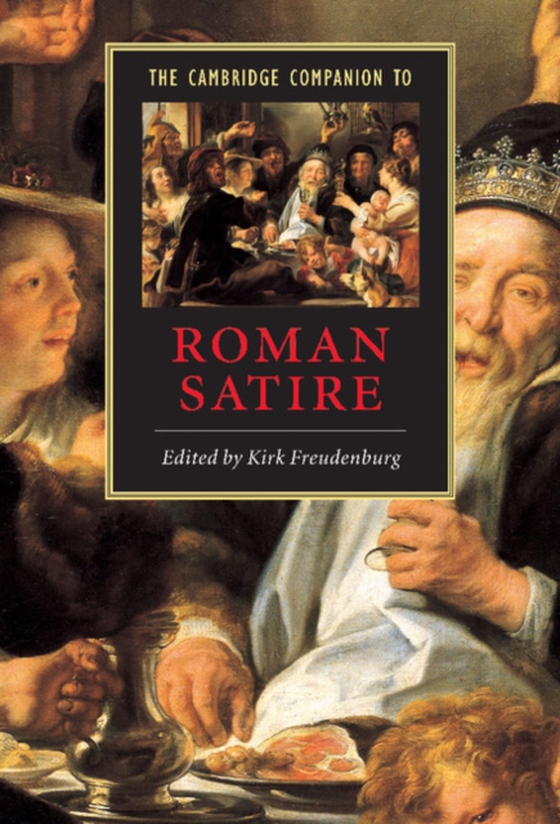
Freudenburg, Kirk
(redaktør)
Cambridge Companion to Roman Satire e-bog
337,32 DKK
Satire as a distinct genre of writing was first developed by the Romans in the second century BCE. Regarded by them as uniquely 'their own', satire held a special place in the Roman imagination as the one genre that could address the problems of city life from the perspective of a 'real Roman'. In this Cambridge Companion an international team of scholars provides a stimulating introduction to Ro…
Satire as a distinct genre of writing was first developed by the Romans in the second century BCE. Regarded by them as uniquely 'their own', satire held a special place in the Roman imagination as the one genre that could address the problems of city life from the perspective of a 'real Roman'. In this Cambridge Companion an international team of scholars provides a stimulating introduction to Roman satire's core practitioners and practices, placing them within the contexts of Greco-Roman literary and political history. Besides addressing basic questions of authors, content, and form, the volume looks to the question of what satire 'does' within the world of Greco-Roman social exchanges, and goes on to treat the genre's further development, reception, and translation in Elizabethan England and beyond. Included are studies of the prosimetric, 'Menippean' satires that would become the models of Rabelais, Erasmus, More, and (narrative satire's crowning jewel) Swift.
E-bog
337,32 DKK
Forlag
Cambridge University Press
Udgivet
12.05.2005
Genrer
Literary studies: ancient, classical and medieval
Sprog
English
Format
epub
Beskyttelse
LCP
ISBN
9781139816557
Satire as a distinct genre of writing was first developed by the Romans in the second century BCE. Regarded by them as uniquely 'their own', satire held a special place in the Roman imagination as the one genre that could address the problems of city life from the perspective of a 'real Roman'. In this Cambridge Companion an international team of scholars provides a stimulating introduction to Roman satire's core practitioners and practices, placing them within the contexts of Greco-Roman literary and political history. Besides addressing basic questions of authors, content, and form, the volume looks to the question of what satire 'does' within the world of Greco-Roman social exchanges, and goes on to treat the genre's further development, reception, and translation in Elizabethan England and beyond. Included are studies of the prosimetric, 'Menippean' satires that would become the models of Rabelais, Erasmus, More, and (narrative satire's crowning jewel) Swift.