 Dansk
Dansk


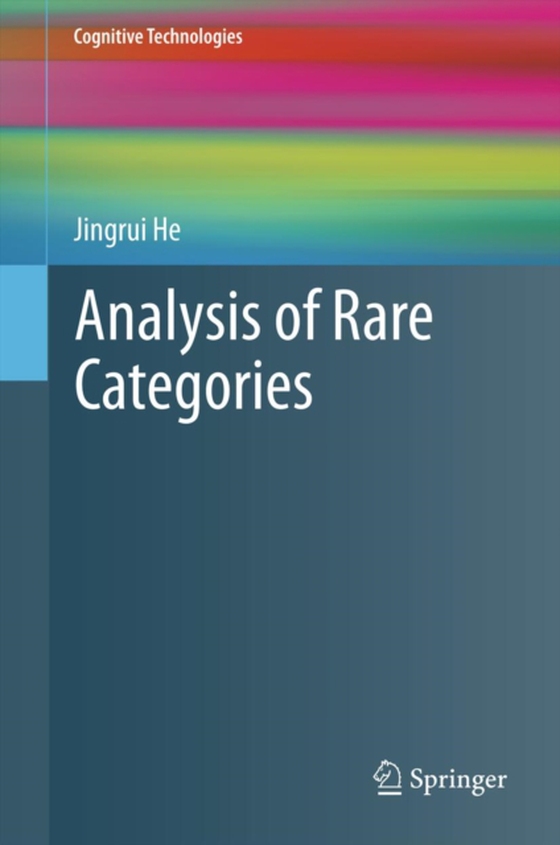
He, Jingrui
(forfatter)
Analysis of Rare Categories e-bog
875,33 DKK
In many real-world problems, rare categories (minority classes) play essential roles despite their extreme scarcity. The discovery, characterization and prediction of rare categories of rare examples may protect us from fraudulent or malicious behavior, aid scientific discovery, and even save lives. This book focuses on rare category analysis, where the majority classes have smooth distributions,…
In many real-world problems, rare categories (minority classes) play essential roles despite their extreme scarcity. The discovery, characterization and prediction of rare categories of rare examples may protect us from fraudulent or malicious behavior, aid scientific discovery, and even save lives. This book focuses on rare category analysis, where the majority classes have smooth distributions, and the minority classes exhibit the compactness property. Furthermore, it focuses on the challenging cases where the support regions of the majority and minority classes overlap. The author has developed effective algorithms with theoretical guarantees and good empirical results for the related techniques, and these are explained in detail. The book is suitable for researchers in the area of artificial intelligence, in particular machine learning and data mining.
E-bog
875,33 DKK
Forlag
Springer
Udgivet
05.01.2012
Genrer
Information theory
Sprog
English
Format
pdf
Beskyttelse
LCP
ISBN
9783642228131
In many real-world problems, rare categories (minority classes) play essential roles despite their extreme scarcity. The discovery, characterization and prediction of rare categories of rare examples may protect us from fraudulent or malicious behavior, aid scientific discovery, and even save lives. This book focuses on rare category analysis, where the majority classes have smooth distributions, and the minority classes exhibit the compactness property. Furthermore, it focuses on the challenging cases where the support regions of the majority and minority classes overlap. The author has developed effective algorithms with theoretical guarantees and good empirical results for the related techniques, and these are explained in detail. The book is suitable for researchers in the area of artificial intelligence, in particular machine learning and data mining.