 Dansk
Dansk


Wilson, Alan
(forfatter)
Collaborative Approach to Trade e-bog
1021,49 DKK
This book applies regional analysis to the challenges facing global investment agencies seeking to enhance trade in lagging regions. It shows how spatial interaction and agent-based modelling can be used as the basis for developing new plans and policies. An in-depth analysis of trade routes is presented, which can be used to develop policies for increasing efficiency and reducing costs. Landlock…
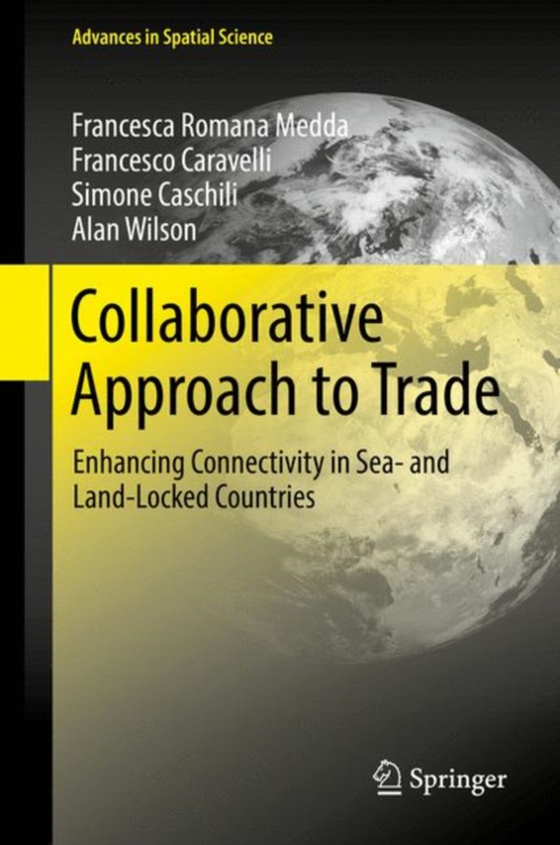
This book applies regional analysis to the challenges facing global investment agencies seeking to enhance trade in lagging regions. It shows how spatial interaction and agent-based modelling can be used as the basis for developing new plans and policies. An in-depth analysis of trade routes is presented, which can be used to develop policies for increasing efficiency and reducing costs. Landlocked Uganda and the sea-locked South Pacific Islands serve to illustrate the problems of covering sizable distances, accelerating export flows and improving supply chain efficiency. These examples also provide an excellent illustration of the power of regional science, from assembling data bases in difficult situations to developing and applying models of the trade system.
E-bog
1021,49 DKK
Forlag
Springer
Udgivet
24.04.2017
Genrer
GTM
Sprog
English
Format
pdf
Beskyttelse
LCP
ISBN
9783319470399
This book applies regional analysis to the challenges facing global investment agencies seeking to enhance trade in lagging regions. It shows how spatial interaction and agent-based modelling can be used as the basis for developing new plans and policies. An in-depth analysis of trade routes is presented, which can be used to develop policies for increasing efficiency and reducing costs. Landlocked Uganda and the sea-locked South Pacific Islands serve to illustrate the problems of covering sizable distances, accelerating export flows and improving supply chain efficiency. These examples also provide an excellent illustration of the power of regional science, from assembling data bases in difficult situations to developing and applying models of the trade system.