 Dansk
Dansk


Ruse, Michael
(forfatter)
Social Darwinism e-bog
165,78 DKK
This Element is a philosophical history of Social Darwinism. It begins by discussing the meaning of the term, moving then to its origins, paying particular attention to whether it is Charles Darwin or Herbert Spencer who is the true father of the idea. It gives an exposition of early thinking on the subject, covering Darwin and Spencer themselves and then on to Social Darwinism as found in Americ…
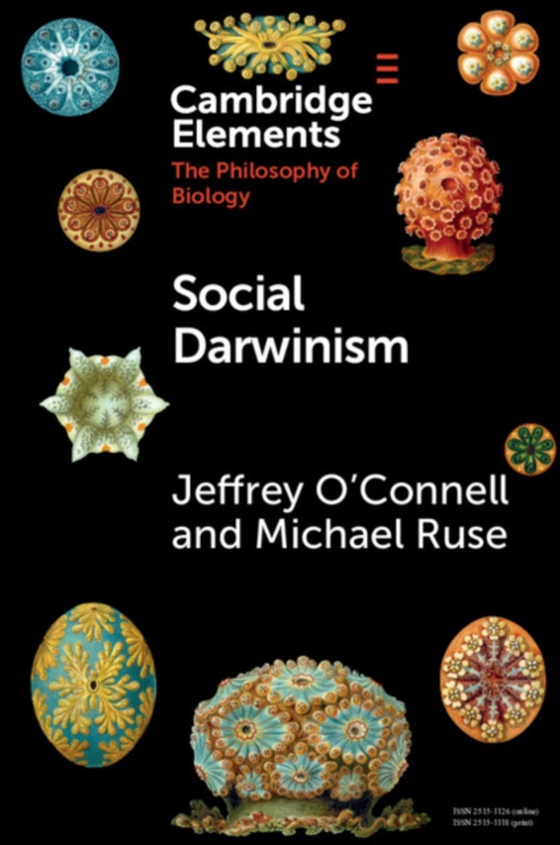
This Element is a philosophical history of Social Darwinism. It begins by discussing the meaning of the term, moving then to its origins, paying particular attention to whether it is Charles Darwin or Herbert Spencer who is the true father of the idea. It gives an exposition of early thinking on the subject, covering Darwin and Spencer themselves and then on to Social Darwinism as found in American thought, with special emphasis on Andrew Carnegie, and Germany with special emphasis on Friedrich von Bernhardi. Attention is also paid to outliers, notably the Englishman Alfred Russel Wallace, the Russian Peter Kropotkin, and the German Friedrich Nietzsche. From here we move into the twentieth century looking at Adolf Hitler - hardly a regular Social Darwinian given he did not believe in evolution - and in the Anglophone world, Julian Huxley and Edward O. Wilson, who reflected the concerns of their society.
E-bog
165,78 DKK
Forlag
Cambridge University Press
Udgivet
29.04.2021
Genrer
H
Sprog
English
Format
epub
Beskyttelse
LCP
ISBN
9781108889049
This Element is a philosophical history of Social Darwinism. It begins by discussing the meaning of the term, moving then to its origins, paying particular attention to whether it is Charles Darwin or Herbert Spencer who is the true father of the idea. It gives an exposition of early thinking on the subject, covering Darwin and Spencer themselves and then on to Social Darwinism as found in American thought, with special emphasis on Andrew Carnegie, and Germany with special emphasis on Friedrich von Bernhardi. Attention is also paid to outliers, notably the Englishman Alfred Russel Wallace, the Russian Peter Kropotkin, and the German Friedrich Nietzsche. From here we move into the twentieth century looking at Adolf Hitler - hardly a regular Social Darwinian given he did not believe in evolution - and in the Anglophone world, Julian Huxley and Edward O. Wilson, who reflected the concerns of their society.