 Dansk
Dansk


Weyland, Kurt
(forfatter)
Assault on Democracy e-bog
273,24 DKK
The interwar years saw the greatest reversal of political liberalization and democratization in modern history. Why and how did dictatorship proliferate throughout Europe and Latin America in the 1920s and 1930s? Blending perspectives from history, comparative politics, and cognitive psychology, Kurt Weyland argues that the Russian Revolution sparked powerful elite groupings that, fearing communi…
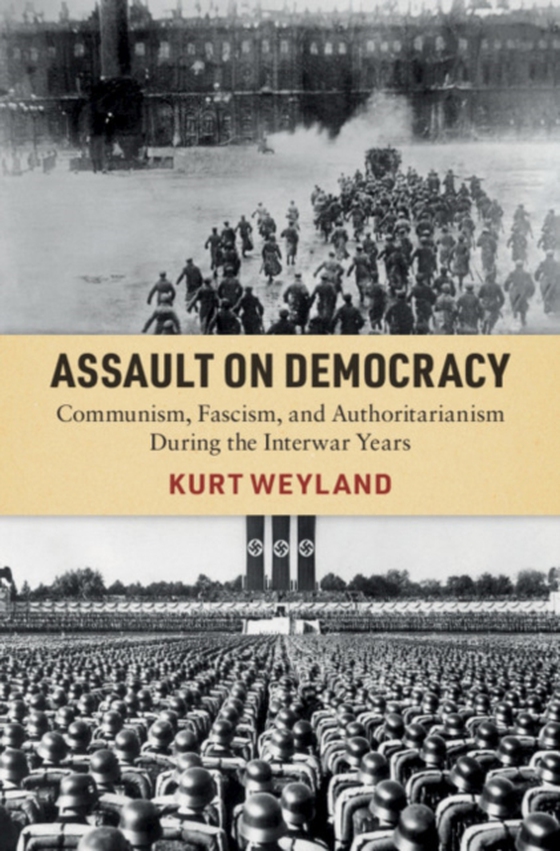
The interwar years saw the greatest reversal of political liberalization and democratization in modern history. Why and how did dictatorship proliferate throughout Europe and Latin America in the 1920s and 1930s? Blending perspectives from history, comparative politics, and cognitive psychology, Kurt Weyland argues that the Russian Revolution sparked powerful elite groupings that, fearing communism, aimed to suppress imitation attempts inspired by Lenin's success. Fears of Communism fueled doubts about the defensive capacity of liberal democracy, strengthened the ideological right, and prompted the rise of fascism in many countries. Yet, as fascist movements spread, their extremity and violence also sparked conservative backlash that often blocked their seizure of power. Weyland teases out the differences across countries, tracing how the resulting conflicts led to the imposition of fascist totalitarianism in Italy and Germany and the installation of conservative authoritarianism in Eastern and Southern Europe and Latin America.
E-bog
273,24 DKK
Forlag
Cambridge University Press
Udgivet
04.02.2021
Genrer
HBJD
Sprog
English
Format
epub
Beskyttelse
LCP
ISBN
9781108952460
The interwar years saw the greatest reversal of political liberalization and democratization in modern history. Why and how did dictatorship proliferate throughout Europe and Latin America in the 1920s and 1930s? Blending perspectives from history, comparative politics, and cognitive psychology, Kurt Weyland argues that the Russian Revolution sparked powerful elite groupings that, fearing communism, aimed to suppress imitation attempts inspired by Lenin's success. Fears of Communism fueled doubts about the defensive capacity of liberal democracy, strengthened the ideological right, and prompted the rise of fascism in many countries. Yet, as fascist movements spread, their extremity and violence also sparked conservative backlash that often blocked their seizure of power. Weyland teases out the differences across countries, tracing how the resulting conflicts led to the imposition of fascist totalitarianism in Italy and Germany and the installation of conservative authoritarianism in Eastern and Southern Europe and Latin America.