 Dansk
Dansk


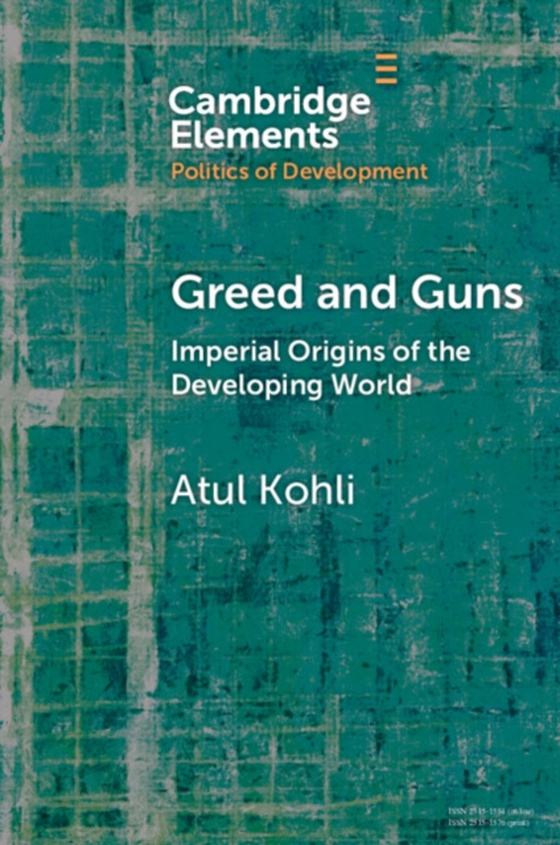
Greed and Guns e-bog
169,16 DKK
(ekskl. moms 135,33 DKK)
This Element studies the causes and the consequences of modern imperialism. The focus is on British and US imperialism in the nineteenth and the twentieth centuries respectively. The dynamics of both formal and informal empires are analyzed. The argument is that imperialism is moved mainly by the desire of major powers to enhance their national economic prosperity. They do so by undermining sover…
This Element studies the causes and the consequences of modern imperialism. The focus is on British and US imperialism in the nineteenth and the twentieth centuries respectively. The dynamics of both formal and informal empires are analyzed. The argument is that imperialism is moved mainly by the desire of major powers to enhance their national economic prosperity. They do so by undermining sovereignty in peripheral countries and establishing open economic access. The impact on the countries of the periphery tends to be negative. In a world of states, then, national sovereignty is an economic asset. Since imperialism seeks to limit the exercise of sovereign power by subject people, there tends to be an inverse relationship between imperialism and development: the less control a state has over its own affairs, the less likely it is that the people of that state will experience economic progress.
E-bog
169,16 DKK
Forlag
Cambridge University Press
Udgivet
02.11.2022
Genrer
HBTQ
Sprog
English
Format
pdf
Beskyttelse
LCP
ISBN
9781009199780
This Element studies the causes and the consequences of modern imperialism. The focus is on British and US imperialism in the nineteenth and the twentieth centuries respectively. The dynamics of both formal and informal empires are analyzed. The argument is that imperialism is moved mainly by the desire of major powers to enhance their national economic prosperity. They do so by undermining sovereignty in peripheral countries and establishing open economic access. The impact on the countries of the periphery tends to be negative. In a world of states, then, national sovereignty is an economic asset. Since imperialism seeks to limit the exercise of sovereign power by subject people, there tends to be an inverse relationship between imperialism and development: the less control a state has over its own affairs, the less likely it is that the people of that state will experience economic progress.