 Dansk
Dansk


Sanderson, Stephen K.
(forfatter)
Revolutions e-bog
403,64 DKK
This expanded, updated edition of Revolutions offers a new chapter on terrorism and on social movements, including jihadism. Revolutions and state breakdowns are the primary focus as Sanderson presents prominent theories and describes the process of revolutions. The book covers famous revolutions from history (France, Russia, China) and several social and political revolutions in the Third World …
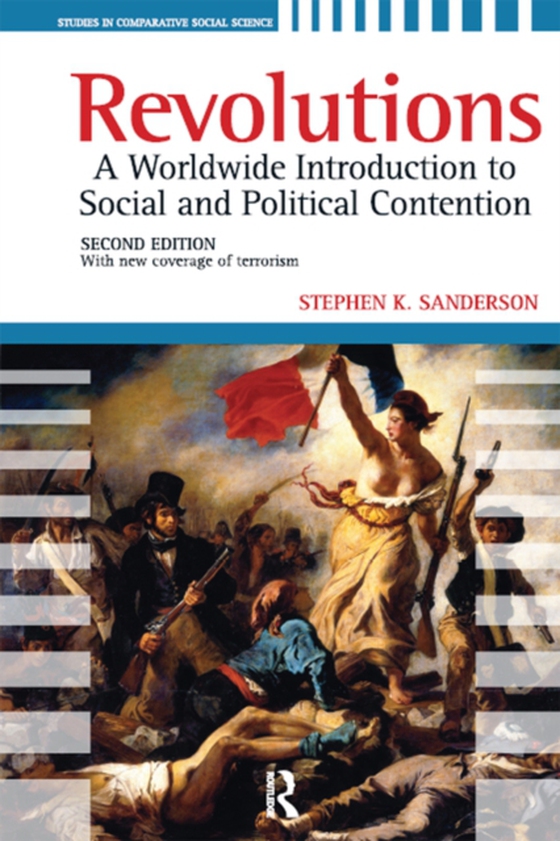
This expanded, updated edition of Revolutions offers a new chapter on terrorism and on social movements, including jihadism. Revolutions and state breakdowns are the primary focus as Sanderson presents prominent theories and describes the process of revolutions. The book covers famous revolutions from history (France, Russia, China) and several social and political revolutions in the Third World (Cuba, Nicaragua, Iran, and the Philippines). Given the frequency of revolutionary movements, a key question addressed by the book is 'Why are actual revolutions so rare?' Sanderson also assesses the state breakdowns in Eastern Europe and the Soviet Union after 1989, the typical outcomes of revolutions, and the future of revolutions. An appendix presents biographical and autobiographical sketches of several of the most prominent scholars of revolutions.
E-bog
403,64 DKK
Forlag
Routledge
Udgivet
03.12.2015
Længde
290 sider
Genrer
HBTV
Sprog
English
Format
epub
Beskyttelse
LCP
ISBN
9781317264569
This expanded, updated edition of Revolutions offers a new chapter on terrorism and on social movements, including jihadism. Revolutions and state breakdowns are the primary focus as Sanderson presents prominent theories and describes the process of revolutions. The book covers famous revolutions from history (France, Russia, China) and several social and political revolutions in the Third World (Cuba, Nicaragua, Iran, and the Philippines). Given the frequency of revolutionary movements, a key question addressed by the book is 'Why are actual revolutions so rare?' Sanderson also assesses the state breakdowns in Eastern Europe and the Soviet Union after 1989, the typical outcomes of revolutions, and the future of revolutions. An appendix presents biographical and autobiographical sketches of several of the most prominent scholars of revolutions.