 Dansk
Dansk


Ameriks, Karl
(redaktør)
Cambridge Companion to German Idealism e-bog
322,59 DKK
The Cambridge Companion to German Idealism, first published in 2000, offers a comprehensive, penetrating and informative guide to what is regarded as the classical period of German philosophy. Kant, Fichte, Hegel and Schelling are all discussed in detail, together with a number of their contemporaries, such as Holderlin and Schleiermacher, whose influence was considerable but whose work is less w…
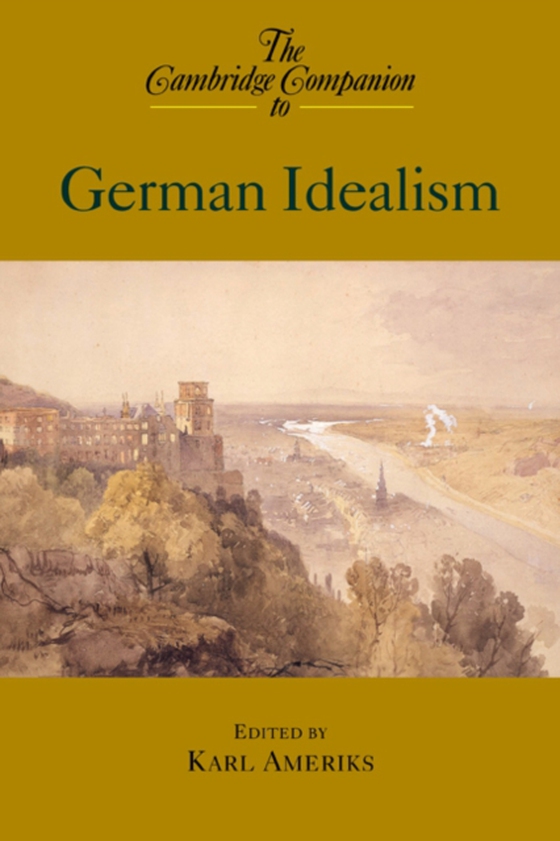
The Cambridge Companion to German Idealism, first published in 2000, offers a comprehensive, penetrating and informative guide to what is regarded as the classical period of German philosophy. Kant, Fichte, Hegel and Schelling are all discussed in detail, together with a number of their contemporaries, such as Holderlin and Schleiermacher, whose influence was considerable but whose work is less well known in the English-speaking world. The essays in the volume trace and explore the unifying themes of German Idealism, and discuss their relationship to Romanticism, the Enlightenment, and the culture of seventeenth- and eighteenth-century Europe. The result is an illuminating overview of a rich and complex philosophical movement, and will appeal to a wide range of readers in philosophy, German studies, theology, literature, and the history of ideas.
E-bog
322,59 DKK
Forlag
Cambridge University Press
Udgivet
30.10.2000
Genrer
HPC
Sprog
English
Format
epub
Beskyttelse
LCP
ISBN
9781139816052
The Cambridge Companion to German Idealism, first published in 2000, offers a comprehensive, penetrating and informative guide to what is regarded as the classical period of German philosophy. Kant, Fichte, Hegel and Schelling are all discussed in detail, together with a number of their contemporaries, such as Holderlin and Schleiermacher, whose influence was considerable but whose work is less well known in the English-speaking world. The essays in the volume trace and explore the unifying themes of German Idealism, and discuss their relationship to Romanticism, the Enlightenment, and the culture of seventeenth- and eighteenth-century Europe. The result is an illuminating overview of a rich and complex philosophical movement, and will appeal to a wide range of readers in philosophy, German studies, theology, literature, and the history of ideas.