 Dansk
Dansk


Huttemann, Andreas
(forfatter)
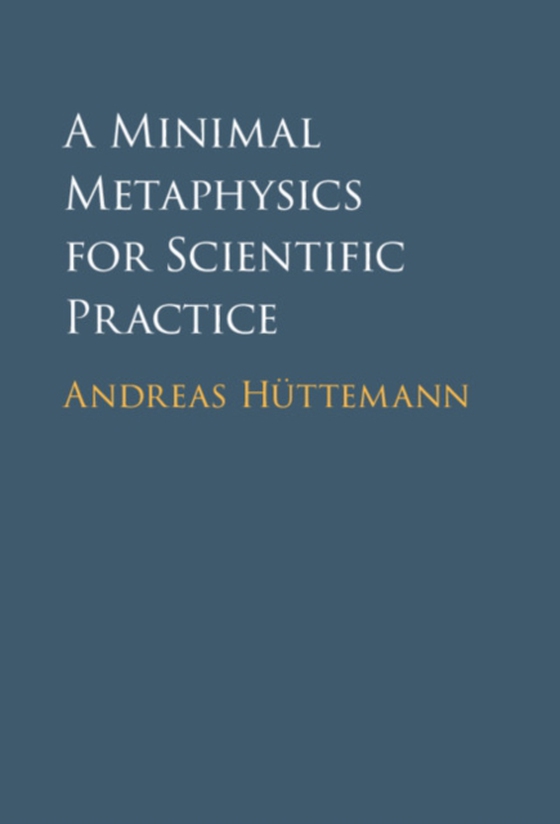
Minimal Metaphysics for Scientific Practice e-bog
238,03 DKK
What are the metaphysical commitments which best 'make sense' of our scientific practice (rather than our scientific theories)? In this book, Andreas Huttemann provides a minimal metaphysics for scientific practice, i.e. a metaphysics that refrains from postulating any structure that is explanatorily irrelevant. Huttemann closely analyses paradigmatic aspects of scientific practice, such as predi…
What are the metaphysical commitments which best 'make sense' of our scientific practice (rather than our scientific theories)? In this book, Andreas Huttemann provides a minimal metaphysics for scientific practice, i.e. a metaphysics that refrains from postulating any structure that is explanatorily irrelevant. Huttemann closely analyses paradigmatic aspects of scientific practice, such as prediction, explanation and manipulation, to consider the questions whether and (if so) what metaphysical presuppositions best account for these practices. He looks at the role which scientific generalisation (laws of nature) play in predicting, testing, and explaining the behaviour of systems. He also develops a theory of causation in terms of quasi-inertial processes and interfering factors, and he proposes an account of reductive practices that makes minimal metaphysical assumptions. His book will be valuable for scholars and advanced students working in both philosophy of science and metaphysics.
E-bog
238,03 DKK
Forlag
Cambridge University Press
Udgivet
01.07.2021
Genrer
HPJ
Sprog
English
Format
epub
Beskyttelse
LCP
ISBN
9781009021050
What are the metaphysical commitments which best 'make sense' of our scientific practice (rather than our scientific theories)? In this book, Andreas Huttemann provides a minimal metaphysics for scientific practice, i.e. a metaphysics that refrains from postulating any structure that is explanatorily irrelevant. Huttemann closely analyses paradigmatic aspects of scientific practice, such as prediction, explanation and manipulation, to consider the questions whether and (if so) what metaphysical presuppositions best account for these practices. He looks at the role which scientific generalisation (laws of nature) play in predicting, testing, and explaining the behaviour of systems. He also develops a theory of causation in terms of quasi-inertial processes and interfering factors, and he proposes an account of reductive practices that makes minimal metaphysical assumptions. His book will be valuable for scholars and advanced students working in both philosophy of science and metaphysics.