 Dansk
Dansk


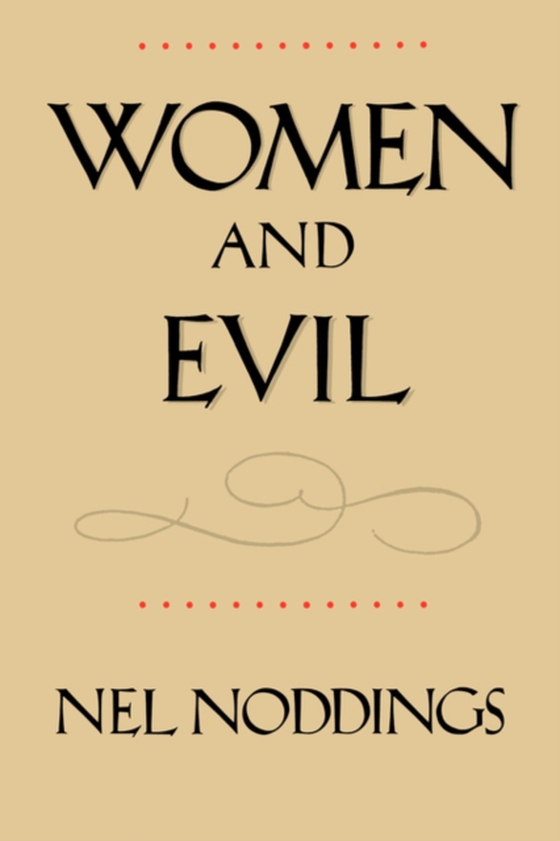
Noddings, Nel
(forfatter)
Women and Evil e-bog
295,53 DKK
Human beings love to fictionalize evil--to terrorize each other with stories of defilement, horror, excruciating pain, and divine retribution. Beneath the surface of bewitchment and half-sick amusement, however, lies the realization that evil is real and that people must find a way to face and overcome it. What we require, Carl Jung suggested, is a morality of evil--a carefully thought out plan b…
Human beings love to fictionalize evil--to terrorize each other with stories of defilement, horror, excruciating pain, and divine retribution. Beneath the surface of bewitchment and half-sick amusement, however, lies the realization that evil is real and that people must find a way to face and overcome it. What we require, Carl Jung suggested, is a morality of evil--a carefully thought out plan by which to manage the evil in ourselves, in others, and in whatever deities we posit. This book is not written from a Jungian perspective, but it is nonetheless an attempt to describe a morality of evil.One suspects that descriptions of evil and the so-called problem of evil have been thoroughly suffused with male interests and conditioned by masculine experience. This result could hardly have been avoided in a sexist culture, and recognizing the truth of such a claim does not commit us to condemn every male philosopher and theologian who has written on the problem. It suggests, rather, that we may get a clearer view of evil if we take a different standpoint. The standpoint I take here will be that of women; that is, I will attempt to describe evil from the perspective of womens experience.
E-bog
295,53 DKK
Udgivet
08.05.1991
Længde
296 sider
Genrer
HPJ
Sprog
English
Format
pdf
Beskyttelse
LCP
ISBN
9780520911208
Human beings love to fictionalize evil--to terrorize each other with stories of defilement, horror, excruciating pain, and divine retribution. Beneath the surface of bewitchment and half-sick amusement, however, lies the realization that evil is real and that people must find a way to face and overcome it. What we require, Carl Jung suggested, is a morality of evil--a carefully thought out plan by which to manage the evil in ourselves, in others, and in whatever deities we posit. This book is not written from a Jungian perspective, but it is nonetheless an attempt to describe a morality of evil.One suspects that descriptions of evil and the so-called problem of evil have been thoroughly suffused with male interests and conditioned by masculine experience. This result could hardly have been avoided in a sexist culture, and recognizing the truth of such a claim does not commit us to condemn every male philosopher and theologian who has written on the problem. It suggests, rather, that we may get a clearer view of evil if we take a different standpoint. The standpoint I take here will be that of women; that is, I will attempt to describe evil from the perspective of womens experience.