 Dansk
Dansk


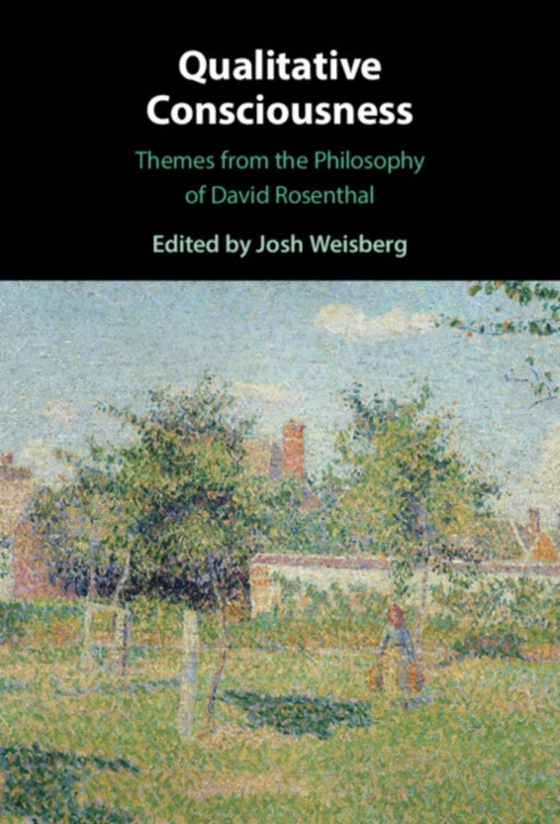
Qualitative Consciousness e-bog
1002,81 DKK
(ekskl. moms 802,25 DKK)
Qualitative consciousness is conscious experience marked by the presence of sensory qualities, like the experienced painfulness of having a piano dropped on your foot, or the consciousness of seeing the brilliant reds and oranges of a sunset. Over his career, philosopher David Rosenthal has defended an influential theoretical approach to explaining qualitative consciousness. This approach involve…
Qualitative consciousness is conscious experience marked by the presence of sensory qualities, like the experienced painfulness of having a piano dropped on your foot, or the consciousness of seeing the brilliant reds and oranges of a sunset. Over his career, philosopher David Rosenthal has defended an influential theoretical approach to explaining qualitative consciousness. This approach involves the development of two theories - the higher-order thought theory of mental state consciousness and the quality space theory of sensory quality. If the problem of explaining qualitative consciousness is divided into two more manageable pieces, the door opens to a satisfying explanation of what is seen by some to be an intractable explanatory puzzle. This interdisciplinary collection develops, criticizes, and expands upon themes inspired by Rosenthal's work. The result is an exciting collection of new essays by philosophers and scientists, which will be of interest to all those engaged in consciousness studies.
E-bog
1002,81 DKK
Forlag
Cambridge University Press
Udgivet
20.10.2022
Genrer
HPK
Sprog
English
Format
epub
Beskyttelse
LCP
ISBN
9781108851831
Qualitative consciousness is conscious experience marked by the presence of sensory qualities, like the experienced painfulness of having a piano dropped on your foot, or the consciousness of seeing the brilliant reds and oranges of a sunset. Over his career, philosopher David Rosenthal has defended an influential theoretical approach to explaining qualitative consciousness. This approach involves the development of two theories - the higher-order thought theory of mental state consciousness and the quality space theory of sensory quality. If the problem of explaining qualitative consciousness is divided into two more manageable pieces, the door opens to a satisfying explanation of what is seen by some to be an intractable explanatory puzzle. This interdisciplinary collection develops, criticizes, and expands upon themes inspired by Rosenthal's work. The result is an exciting collection of new essays by philosophers and scientists, which will be of interest to all those engaged in consciousness studies.