 Dansk
Dansk


Skaaning, Svend-Erik
(forfatter)
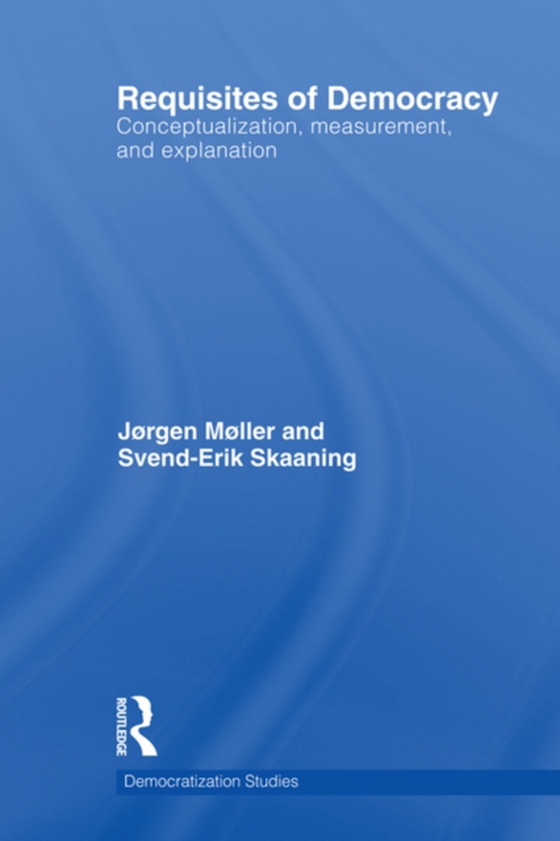
Requisites of Democracy e-bog
436,85 DKK
This book brings together the conceptual and theoretical writings of Joseph Schumpeter, Robert A. Dahl, Guillermo O'Donnell, and T. H. Marshall. It demonstrates that most of the different conceptions of democracy in the democratization literature can be ordered in one systematic regime typology that distinguishes between 'thinner' and 'thicker' definitions of democracy.The authors argue that the…
This book brings together the conceptual and theoretical writings of Joseph Schumpeter, Robert A. Dahl, Guillermo O'Donnell, and T. H. Marshall. It demonstrates that most of the different conceptions of democracy in the democratization literature can be ordered in one systematic regime typology that distinguishes between 'thinner' and 'thicker' definitions of democracy.The authors argue that the empirical pattern revealed by this typology is explained by the combination of internal structural constraints and international factors facilitating democracy. The result of such contending forces is that most of the democratizations in recent decades have only produced competitive elections, rather than 'more demanding' attributes of democracy such as political liberties, the rule of law, and social rights.Examining theoretical and empirical approaches to measuring, defining and understanding democracy, the book will be of interest to scholars of political theory and comparative politics in general and democratization studies in particular.
E-bog
436,85 DKK
Forlag
Routledge
Udgivet
29.03.2012
Længde
164 sider
Genrer
HPS
Sprog
English
Format
pdf
Beskyttelse
LCP
ISBN
9781136665844
This book brings together the conceptual and theoretical writings of Joseph Schumpeter, Robert A. Dahl, Guillermo O'Donnell, and T. H. Marshall. It demonstrates that most of the different conceptions of democracy in the democratization literature can be ordered in one systematic regime typology that distinguishes between 'thinner' and 'thicker' definitions of democracy.The authors argue that the empirical pattern revealed by this typology is explained by the combination of internal structural constraints and international factors facilitating democracy. The result of such contending forces is that most of the democratizations in recent decades have only produced competitive elections, rather than 'more demanding' attributes of democracy such as political liberties, the rule of law, and social rights.Examining theoretical and empirical approaches to measuring, defining and understanding democracy, the book will be of interest to scholars of political theory and comparative politics in general and democratization studies in particular.