 Dansk
Dansk


Joan E. Cook, Cook
(forfatter)
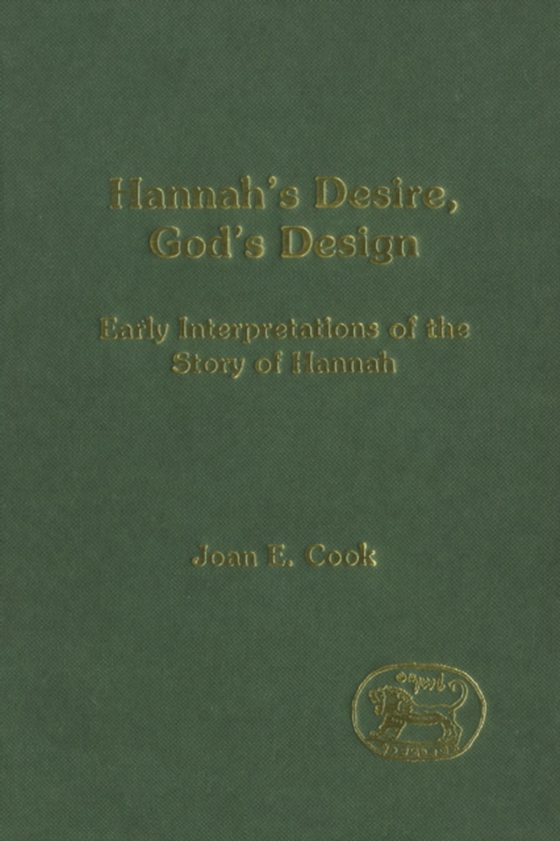
Hannah's Desire, God's Design e-bog
473,39 DKK
This study analyses the biblical personage Hannah as a literary entity, to illustrate her uniquely significant place in the traditions of Israel as the mother of Samuel and thus of the reform of the priesthood, the creation of the monarchy, and the teacher of all Israel. There are three interweaving themes: first, the literary issue of the barren mother type scene; second, the theological theme o…
This study analyses the biblical personage Hannah as a literary entity, to illustrate her uniquely significant place in the traditions of Israel as the mother of Samuel and thus of the reform of the priesthood, the creation of the monarchy, and the teacher of all Israel. There are three interweaving themes: first, the literary issue of the barren mother type scene; second, the theological theme of divine guidance and human initiative; and third, the perspectives of early biblical interpretation. The study develops around four works: the Hannah narrative in 1 Samuel 1-2, Pseudo-Philo's Biblical Antiquities, the Targum of the Prophets, and the Infancy Narrative in Luke 1-2.
E-bog
473,39 DKK
Forlag
Sheffield Academic Press
Udgivet
01.03.1999
Længde
136 sider
Genrer
HRCG9
Sprog
English
Format
pdf
Beskyttelse
LCP
ISBN
9780567298461
This study analyses the biblical personage Hannah as a literary entity, to illustrate her uniquely significant place in the traditions of Israel as the mother of Samuel and thus of the reform of the priesthood, the creation of the monarchy, and the teacher of all Israel. There are three interweaving themes: first, the literary issue of the barren mother type scene; second, the theological theme of divine guidance and human initiative; and third, the perspectives of early biblical interpretation. The study develops around four works: the Hannah narrative in 1 Samuel 1-2, Pseudo-Philo's Biblical Antiquities, the Targum of the Prophets, and the Infancy Narrative in Luke 1-2.