 Dansk
Dansk


Rushton, Michael
(forfatter)
Moral Foundations of Public Funding for the Arts e-bog
1021,49 DKK
This book provides a detailed account, and critique, of diverse approaches to the arts funding question, with a focus on the arm's length arts councils that are the norm in the Anglo-American world. It builds on economic methods, the liberal-egalitarian framework of John Rawls, the communitarian opposition to the liberal framework, the capabilities approach to equality, and the cultural conservat…
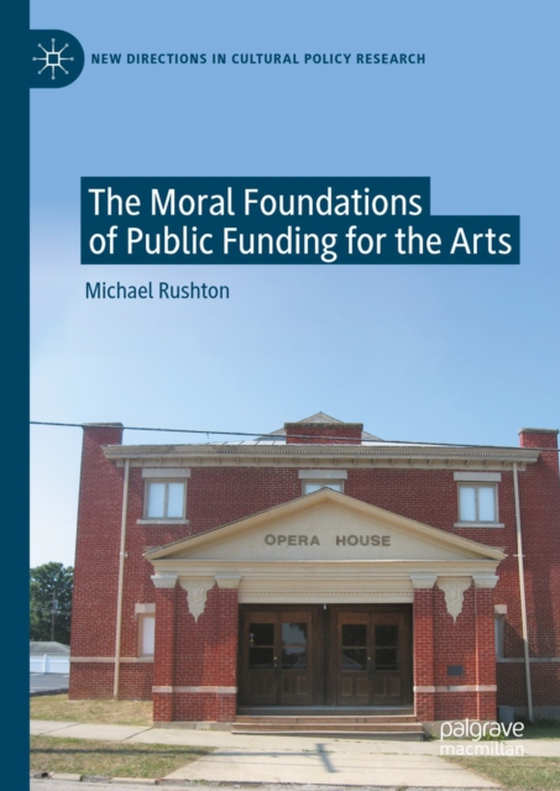
This book provides a detailed account, and critique, of diverse approaches to the arts funding question, with a focus on the arm's length arts councils that are the norm in the Anglo-American world. It builds on economic methods, the liberal-egalitarian framework of John Rawls, the communitarian opposition to the liberal framework, the capabilities approach to equality, and the cultural conservatism of Roger Scruton and others. In each case, the book considers the very practical aspect of public funding of the arts, namely, what are the implications for what ought to receive priority, and what parts of the cultural world are best left to their own, private sector, devices. It is not a work of "e;arts advocacy"e;. Rather, the book challenges assumptions, and sparks critical debate in the field.
E-bog
1021,49 DKK
Forlag
Palgrave Macmillan
Udgivet
26.06.2023
Genrer
Cultural studies
Sprog
English
Format
epub
Beskyttelse
LCP
ISBN
9783031351068
This book provides a detailed account, and critique, of diverse approaches to the arts funding question, with a focus on the arm's length arts councils that are the norm in the Anglo-American world. It builds on economic methods, the liberal-egalitarian framework of John Rawls, the communitarian opposition to the liberal framework, the capabilities approach to equality, and the cultural conservatism of Roger Scruton and others. In each case, the book considers the very practical aspect of public funding of the arts, namely, what are the implications for what ought to receive priority, and what parts of the cultural world are best left to their own, private sector, devices. It is not a work of "e;arts advocacy"e;. Rather, the book challenges assumptions, and sparks critical debate in the field.