 Dansk
Dansk


Schmidt, Eva
(forfatter)
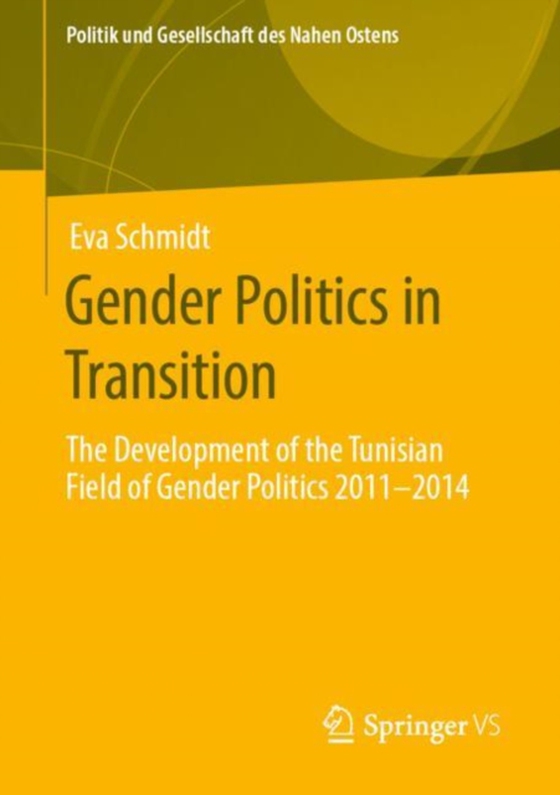
Gender Politics in Transition e-bog
692,63 DKK
Eva Schmidt analyses how power relations, ideas, and institutions in Tunisian gender politics changed during the democratisation process 2011-2014. Her analysis of gender politics offers a productive lens to understand the course of the Tunisian transition. As gender policies are integral to Tunisian national identity, they became a major battlefield in the fight for political inclusion and exclu…
Eva Schmidt analyses how power relations, ideas, and institutions in Tunisian gender politics changed during the democratisation process 2011-2014. Her analysis of gender politics offers a productive lens to understand the course of the Tunisian transition. As gender policies are integral to Tunisian national identity, they became a major battlefield in the fight for political inclusion and exclusion. In this context, liberal and leftist feminists accessed the decision-making institutions and enhanced the existing women's rights legislation. Yet the intertwinement of modernist nationalism with women's rights also limited the scope for feminist demands. This book contributes a unique case study to political transitology and advances an original theoretical approach based on Bourdieu's theory of the political field.
E-bog
692,63 DKK
Forlag
Springer VS
Udgivet
11.11.2019
Genrer
Gender studies, gender groups
Sprog
English
Format
pdf
Beskyttelse
LCP
ISBN
9783658285401
Eva Schmidt analyses how power relations, ideas, and institutions in Tunisian gender politics changed during the democratisation process 2011-2014. Her analysis of gender politics offers a productive lens to understand the course of the Tunisian transition. As gender policies are integral to Tunisian national identity, they became a major battlefield in the fight for political inclusion and exclusion. In this context, liberal and leftist feminists accessed the decision-making institutions and enhanced the existing women's rights legislation. Yet the intertwinement of modernist nationalism with women's rights also limited the scope for feminist demands. This book contributes a unique case study to political transitology and advances an original theoretical approach based on Bourdieu's theory of the political field.