 Dansk
Dansk


Lomborg, Bjorn
(redaktør)
Global Crises, Global Solutions e-bog
253,01 DKK
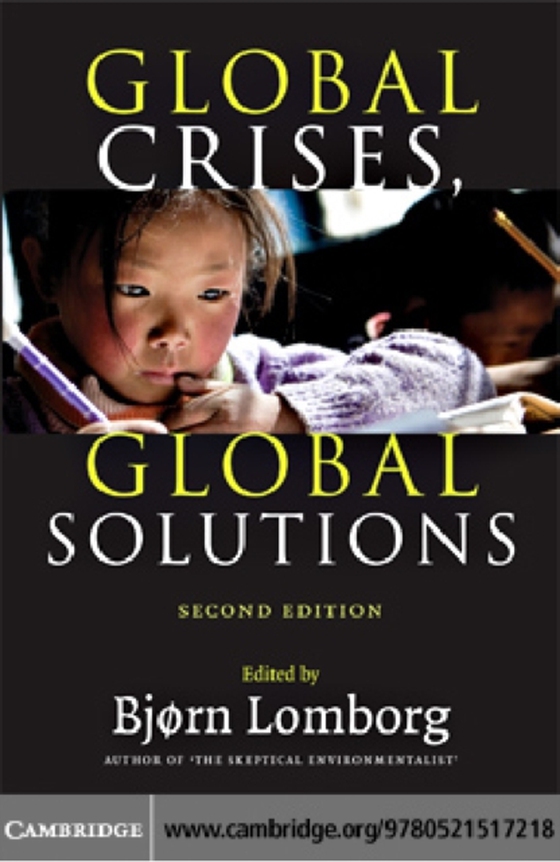
The first edition of Global Crises, Global Solutions was nominated as one of the books of the year by The Economist in 2004. This second edition asks: if we had more money to spend to help the world's poorest people, where could we spend it most effectively? Using a common framework of cost-benefit analysis a team of leading economists, including five Nobel prize winners, assess the attractivenes…
The first edition of Global Crises, Global Solutions was nominated as one of the books of the year by The Economist in 2004. This second edition asks: if we had more money to spend to help the world's poorest people, where could we spend it most effectively? Using a common framework of cost-benefit analysis a team of leading economists, including five Nobel prize winners, assess the attractiveness of a wide range of policy options for combating ten of the world's biggest problems: Air pollution, Conflicts, Diseases, Education, Global Warming, Malnutrition and Hunger, Sanitation and Clean Water, Subsidies and Trade Barriers, Terrorism, Women and Development. The arguments are clearly presented and fully referenced so that readers are encouraged to make their own evaluation of the menu of policy options on offer. Whether you agree or disagree with the economists' conclusions, there is a wealth of data and ideas to discuss and debate.
E-bog
253,01 DKK
Forlag
Cambridge University Press
Udgivet
24.05.2011
Genrer
JFF
Sprog
English
Format
pdf
Beskyttelse
LCP
ISBN
9781139064729
The first edition of Global Crises, Global Solutions was nominated as one of the books of the year by The Economist in 2004. This second edition asks: if we had more money to spend to help the world's poorest people, where could we spend it most effectively? Using a common framework of cost-benefit analysis a team of leading economists, including five Nobel prize winners, assess the attractiveness of a wide range of policy options for combating ten of the world's biggest problems: Air pollution, Conflicts, Diseases, Education, Global Warming, Malnutrition and Hunger, Sanitation and Clean Water, Subsidies and Trade Barriers, Terrorism, Women and Development. The arguments are clearly presented and fully referenced so that readers are encouraged to make their own evaluation of the menu of policy options on offer. Whether you agree or disagree with the economists' conclusions, there is a wealth of data and ideas to discuss and debate.