 Dansk
Dansk


Daniel M. Goldstein, Goldstein
(forfatter)
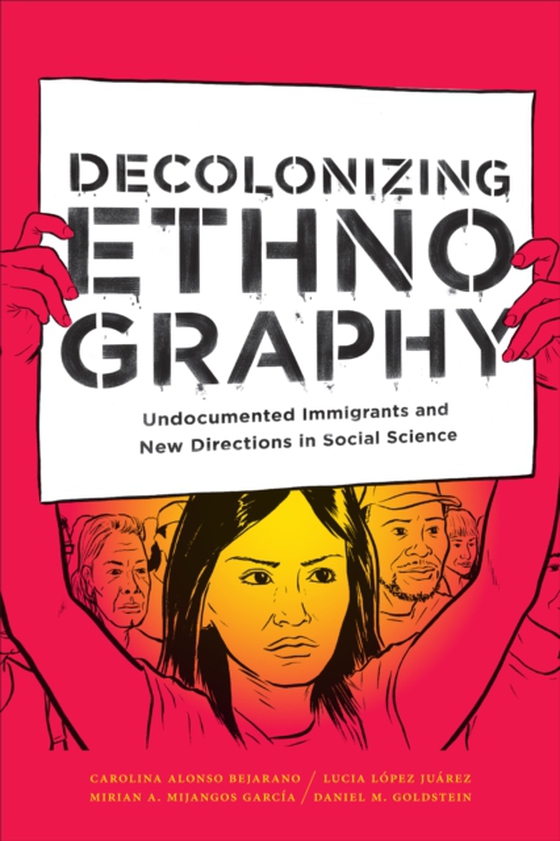
Decolonizing Ethnography e-bog
245,52 DKK
In August 2011, ethnographers Carolina Alonso Bejarano and Daniel M. Goldstein began a research project on undocumented immigration in the United States by volunteering at a center for migrant workers in New Jersey. Two years later, Lucia Lopez Juarez and Mirian A. Mijangos Garcia-two local immigrant workers from Latin America-joined Alonso Bejarano and Goldstein as research assistants and q…
In August 2011, ethnographers Carolina Alonso Bejarano and Daniel M. Goldstein began a research project on undocumented immigration in the United States by volunteering at a center for migrant workers in New Jersey. Two years later, Lucia Lopez Juarez and Mirian A. Mijangos Garcia-two local immigrant workers from Latin America-joined Alonso Bejarano and Goldstein as research assistants and quickly became equal partners for whom ethnographic practice was inseparable from activism. In Decolonizing Ethnography the four coauthors offer a methodological and theoretical reassessment of social science research, showing how it can function as a vehicle for activism and as a tool for marginalized people to theorize their lives. Tacking between personal narratives, ethnographic field notes, an original bilingual play about workers' rights, and examinations of anthropology as a discipline, the coauthors show how the participation of Mijangos Garcia and Lopez Juarez transformed the project's activist and academic dimensions. In so doing, they offer a guide for those wishing to expand the potential of ethnography to serve as a means for social transformation and decolonization.
E-bog
245,52 DKK
Forlag
Duke University Press Books
Udgivet
04.04.2019
Længde
208 sider
Genrer
JFFN
Sprog
English
Format
pdf
Beskyttelse
LCP
ISBN
9781478004547
In August 2011, ethnographers Carolina Alonso Bejarano and Daniel M. Goldstein began a research project on undocumented immigration in the United States by volunteering at a center for migrant workers in New Jersey. Two years later, Lucia Lopez Juarez and Mirian A. Mijangos Garcia-two local immigrant workers from Latin America-joined Alonso Bejarano and Goldstein as research assistants and quickly became equal partners for whom ethnographic practice was inseparable from activism. In Decolonizing Ethnography the four coauthors offer a methodological and theoretical reassessment of social science research, showing how it can function as a vehicle for activism and as a tool for marginalized people to theorize their lives. Tacking between personal narratives, ethnographic field notes, an original bilingual play about workers' rights, and examinations of anthropology as a discipline, the coauthors show how the participation of Mijangos Garcia and Lopez Juarez transformed the project's activist and academic dimensions. In so doing, they offer a guide for those wishing to expand the potential of ethnography to serve as a means for social transformation and decolonization.