 Dansk
Dansk


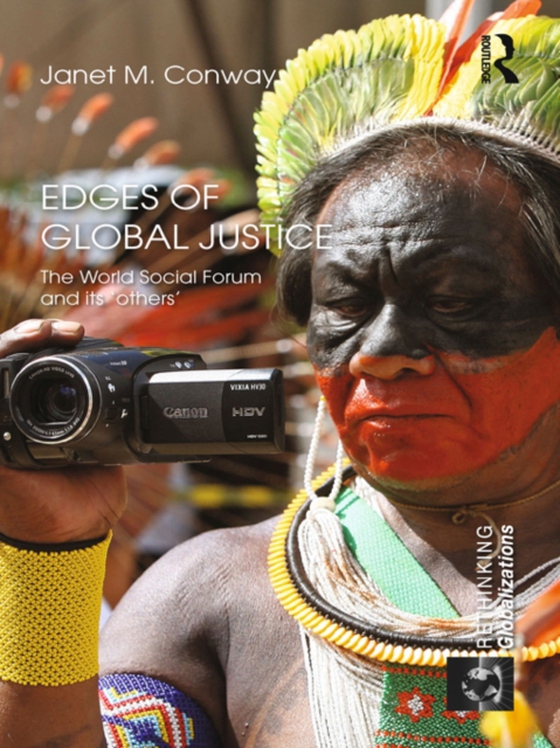
Conway, Janet M.
(forfatter)
Edges of Global Justice e-bog
473,39 DKK
This book analyzes the World Social Forum (WSF) in a context of crisis and transition in the history of Western capitalist modernity. Based on ten years of fieldwork on three continents, this book treats social movements as knowledge producers. It pays attention to what movements are doing and saying on the terrain of the WSF over time and from place to place, and to how they theorize its signifi…
This book analyzes the World Social Forum (WSF) in a context of crisis and transition in the history of Western capitalist modernity. Based on ten years of fieldwork on three continents, this book treats social movements as knowledge producers. It pays attention to what movements are doing and saying on the terrain of the WSF over time and from place to place, and to how they theorize its significance.Framed by the Latin American modernity-coloniality perspective, the book critically engages with discourses of global civil society, autonomism, and transnational feminism toward a reading of the WSF through the lens of 'colonial difference'. Each chapter outlines a set of contestations and contributions with relevance beyond debates about the WSF. It will be of strong interest to students and scholars of social movement studies; international politics; post-colonial studies; gender studies; sociology; political theory and social work.
E-bog
473,39 DKK
Forlag
Routledge
Udgivet
02.10.2012
Længde
224 sider
Genrer
JFFS
Sprog
English
Format
epub
Beskyttelse
LCP
ISBN
9781136300097
This book analyzes the World Social Forum (WSF) in a context of crisis and transition in the history of Western capitalist modernity. Based on ten years of fieldwork on three continents, this book treats social movements as knowledge producers. It pays attention to what movements are doing and saying on the terrain of the WSF over time and from place to place, and to how they theorize its significance.Framed by the Latin American modernity-coloniality perspective, the book critically engages with discourses of global civil society, autonomism, and transnational feminism toward a reading of the WSF through the lens of 'colonial difference'. Each chapter outlines a set of contestations and contributions with relevance beyond debates about the WSF. It will be of strong interest to students and scholars of social movement studies; international politics; post-colonial studies; gender studies; sociology; political theory and social work.