 Dansk
Dansk


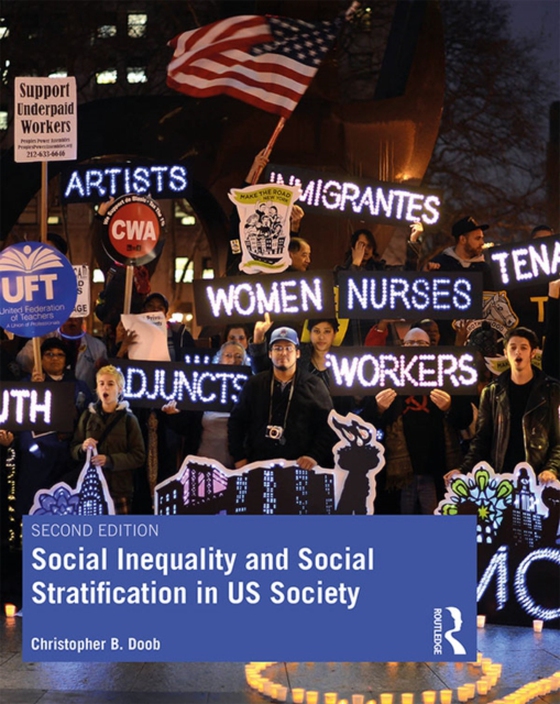
Social Inequality and Social Stratification in US Society e-bog
774,44 DKK
(ekskl. moms 619,55 DKK)
Social Inequality and Social Stratification in US Society uses a historical and conceptual framework to explain social stratification and social inequality. The historical scope gives context to each issue discussed and allows the reader to understand how each topic has evolved over the course of American history. The author uses qualitative data to help explain socioeconomic issues and connect r…
Social Inequality and Social Stratification in US Society uses a historical and conceptual framework to explain social stratification and social inequality. The historical scope gives context to each issue discussed and allows the reader to understand how each topic has evolved over the course of American history. The author uses qualitative data to help explain socioeconomic issues and connect related topics. Each chapter examines major concepts, so readers can see how an individual's success in stratified settings often relies heavily on their access to valued resources-types of capital which involve finances, schooling, social networking, and cultural competence. Analyzing the impact of capital types throughout the text helps map out the prospects for individuals, families, and also classes to maintain or alter their position in social-stratification systems.
E-bog
774,44 DKK
Forlag
Routledge
Udgivet
22.05.2019
Længde
486 sider
Genrer
JFS
Sprog
English
Format
pdf
Beskyttelse
LCP
ISBN
9781000000788
Social Inequality and Social Stratification in US Society uses a historical and conceptual framework to explain social stratification and social inequality. The historical scope gives context to each issue discussed and allows the reader to understand how each topic has evolved over the course of American history. The author uses qualitative data to help explain socioeconomic issues and connect related topics. Each chapter examines major concepts, so readers can see how an individual's success in stratified settings often relies heavily on their access to valued resources-types of capital which involve finances, schooling, social networking, and cultural competence. Analyzing the impact of capital types throughout the text helps map out the prospects for individuals, families, and also classes to maintain or alter their position in social-stratification systems.