 Dansk
Dansk


Gonzalez-Ocantos, Ezequiel A.
(forfatter)
Politics of Transitional Justice in Latin America e-bog
165,78 DKK
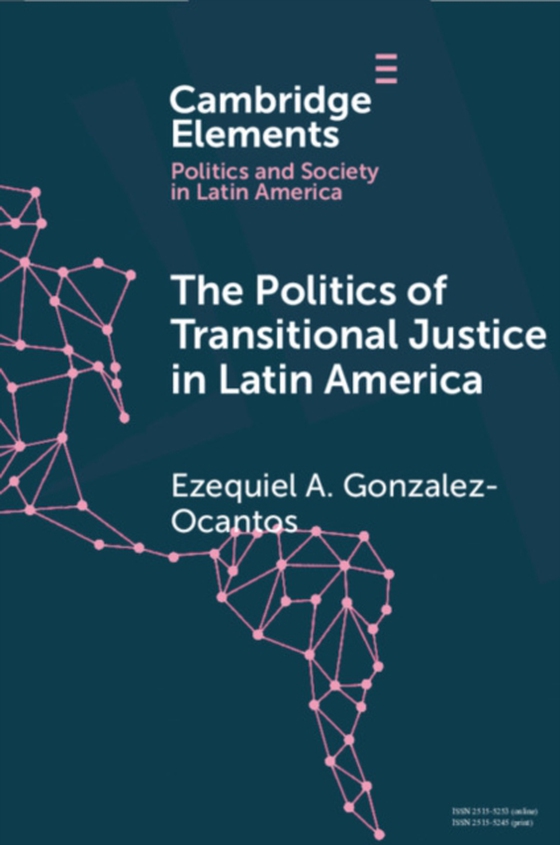
How has Latin America pioneered the field of transitional justice (TJ)? Do approaches vary across the region? This Element describes Latin American innovations in trials and truth commissions, and evaluates two influential models that explain variation in TJ outcomes: the Huntingtonian and Justice Cascade approaches. It argues that scholars should complement these approaches with one that recogni…
How has Latin America pioneered the field of transitional justice (TJ)? Do approaches vary across the region? This Element describes Latin American innovations in trials and truth commissions, and evaluates two influential models that explain variation in TJ outcomes: the Huntingtonian and Justice Cascade approaches. It argues that scholars should complement these approaches with one that recognizes the importance of state capacity building and institutional change. To translate domestic/international political pressure and human rights norms into outcomes, states must develop 'TJ capabilities'. Not only should states be willing to pursue these highly complex policies, they must also develop competent bureaucracies.
E-bog
165,78 DKK
Forlag
Cambridge University Press
Udgivet
29.01.2020
Genrer
JFSL4
Sprog
English
Format
pdf
Beskyttelse
LCP
ISBN
9781108873673
How has Latin America pioneered the field of transitional justice (TJ)? Do approaches vary across the region? This Element describes Latin American innovations in trials and truth commissions, and evaluates two influential models that explain variation in TJ outcomes: the Huntingtonian and Justice Cascade approaches. It argues that scholars should complement these approaches with one that recognizes the importance of state capacity building and institutional change. To translate domestic/international political pressure and human rights norms into outcomes, states must develop 'TJ capabilities'. Not only should states be willing to pursue these highly complex policies, they must also develop competent bureaucracies.