 Dansk
Dansk


Albertus, Michael
(forfatter)
Property without Rights e-bog
230,54 DKK
Major land reform programs have reallocated property in more than one-third of the world's countries in the last century and impacted over one billion people. But only rarely have these programs granted beneficiaries complete property rights. Why is this the case, and what are the consequences? This book draws on wide-ranging original data and charts new conceptual terrain to reveal the political…
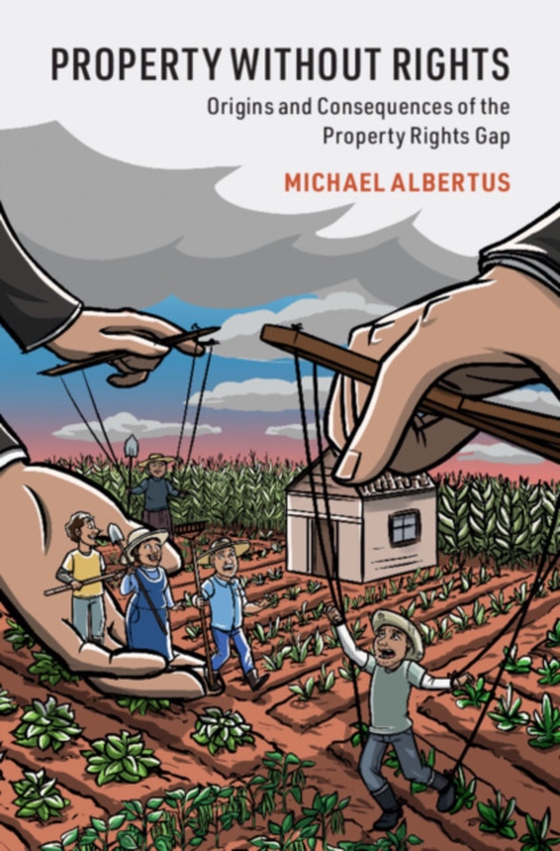
Major land reform programs have reallocated property in more than one-third of the world's countries in the last century and impacted over one billion people. But only rarely have these programs granted beneficiaries complete property rights. Why is this the case, and what are the consequences? This book draws on wide-ranging original data and charts new conceptual terrain to reveal the political origins of the property rights gap. It shows that land reform programs are most often implemented by authoritarian governments who deliberately withhold property rights from beneficiaries. In so doing, governments generate coercive leverage over rural populations and exert social control. This is politically advantageous to ruling governments but it has negative development consequences: it slows economic growth, productivity, and urbanization and it exacerbates inequality. The book also examines the conditions under which subsequent governments close property rights gaps, usually as a result of democratization or foreign pressure.
E-bog
230,54 DKK
Forlag
Cambridge University Press
Udgivet
16.12.2020
Genrer
JFSL4
Sprog
English
Format
pdf
Beskyttelse
LCP
ISBN
9781108879934
Major land reform programs have reallocated property in more than one-third of the world's countries in the last century and impacted over one billion people. But only rarely have these programs granted beneficiaries complete property rights. Why is this the case, and what are the consequences? This book draws on wide-ranging original data and charts new conceptual terrain to reveal the political origins of the property rights gap. It shows that land reform programs are most often implemented by authoritarian governments who deliberately withhold property rights from beneficiaries. In so doing, governments generate coercive leverage over rural populations and exert social control. This is politically advantageous to ruling governments but it has negative development consequences: it slows economic growth, productivity, and urbanization and it exacerbates inequality. The book also examines the conditions under which subsequent governments close property rights gaps, usually as a result of democratization or foreign pressure.