 Dansk
Dansk


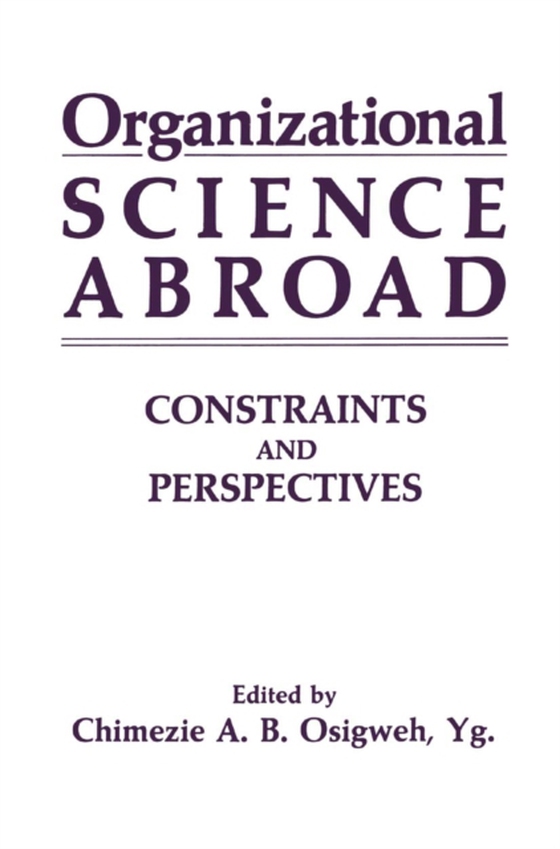
C.A.B., Yg. Osigweh
(redaktør)
Organizational Science Abroad e-bog
1240,73 DKK
Organizing consists of making other people work. We do this by manip- ulating symbols: words, exhortations, memos, charts, signs of status. We expect these symbols to have the desired effects on the people con- cerned. The success of our organizing activities depends on whether the others do attach to our symbols the meanings we expect them to. Whether or not they do so is a function of what I ha…
Organizing consists of making other people work. We do this by manip- ulating symbols: words, exhortations, memos, charts, signs of status. We expect these symbols to have the desired effects on the people con- cerned. The success of our organizing activities depends on whether the others do attach to our symbols the meanings we expect them to. Whether or not they do so is a function of what I have sometimes called "e;the programs in their minds"e; -their learned ways of thinking, feeling, and reacting-in short, a function of their culture. The assumption that organizations could be culture-free is naive and myopic; it is based on a misunderstanding of the very act of organizing. Certainly, few people who have ever worked abroad will make this assumption. The dependence of organizations on their people's mental pro- grams does not mean, of course, that we do not find many similarities across organizations. Some characteristics of human mental program- ming are universal; others are shared by most people in a continent, a country, a region, an industry, a scientific discipline, or even a gender.
E-bog
1240,73 DKK
Forlag
Springer
Udgivet
11.11.2013
Genrer
Sociology
Sprog
English
Format
pdf
Beskyttelse
LCP
ISBN
9781489909121
Organizing consists of making other people work. We do this by manip- ulating symbols: words, exhortations, memos, charts, signs of status. We expect these symbols to have the desired effects on the people con- cerned. The success of our organizing activities depends on whether the others do attach to our symbols the meanings we expect them to. Whether or not they do so is a function of what I have sometimes called "e;the programs in their minds"e; -their learned ways of thinking, feeling, and reacting-in short, a function of their culture. The assumption that organizations could be culture-free is naive and myopic; it is based on a misunderstanding of the very act of organizing. Certainly, few people who have ever worked abroad will make this assumption. The dependence of organizations on their people's mental pro- grams does not mean, of course, that we do not find many similarities across organizations. Some characteristics of human mental program- ming are universal; others are shared by most people in a continent, a country, a region, an industry, a scientific discipline, or even a gender.