 Dansk
Dansk


Wicklund, Robert A.
(forfatter)
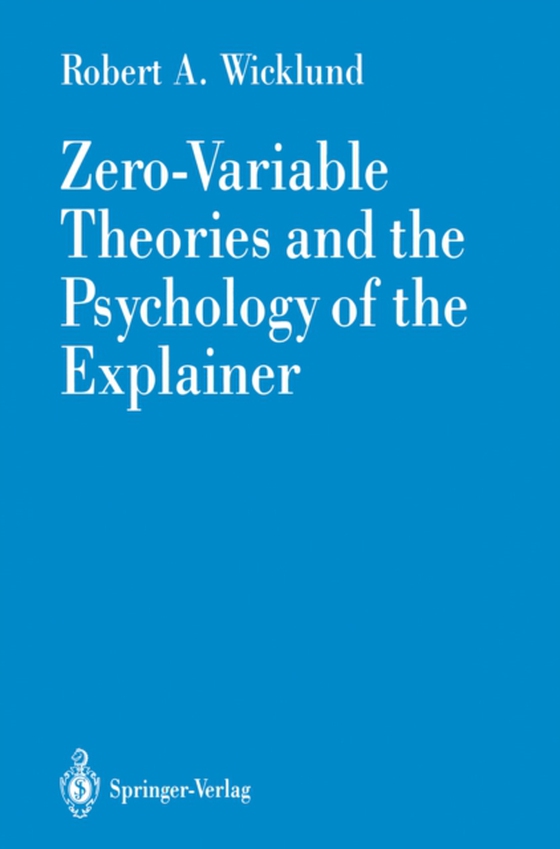
Zero-Variable Theories and the Psychology of the Explainer e-bog
436,85 DKK
In Zero-Variable Theories, Dr. Robert Wicklund invites the reader to consider the psychological perspective of the "e;explainer"e;. In examining the over-simplifications that have become dominant in modern psychology, the author points to such factors as competition with other explainers and pressure to offer and promulgate a unique explanation. The explainer is characterized as equating …
In Zero-Variable Theories, Dr. Robert Wicklund invites the reader to consider the psychological perspective of the "e;explainer"e;. In examining the over-simplifications that have become dominant in modern psychology, the author points to such factors as competition with other explainers and pressure to offer and promulgate a unique explanation. The explainer is characterized as equating theory with simple, fixed categories, and as defending those categories as one would defend a personal territory, fending off competing explainers through mis-use of statistical devices. The end result is the formulation of theories that neglect the perspectives of those whose behaviors are to be explained, and which simultaneously exclude psychological variables.
E-bog
436,85 DKK
Forlag
Springer
Udgivet
06.12.2012
Genrer
Psychology: the self, ego, identity, personality
Sprog
English
Format
pdf
Beskyttelse
LCP
ISBN
9781461233442
In Zero-Variable Theories, Dr. Robert Wicklund invites the reader to consider the psychological perspective of the "e;explainer"e;. In examining the over-simplifications that have become dominant in modern psychology, the author points to such factors as competition with other explainers and pressure to offer and promulgate a unique explanation. The explainer is characterized as equating theory with simple, fixed categories, and as defending those categories as one would defend a personal territory, fending off competing explainers through mis-use of statistical devices. The end result is the formulation of theories that neglect the perspectives of those whose behaviors are to be explained, and which simultaneously exclude psychological variables.