 Dansk
Dansk


Lawless, Rene R.
(forfatter)
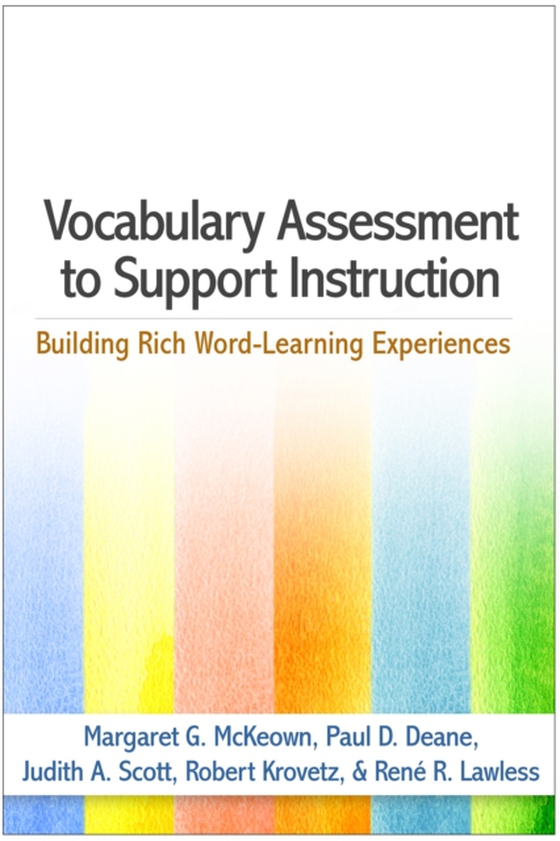
Vocabulary Assessment to Support Instruction e-bog
1167,65 DKK
Vocabulary development is essential for learning, but conventional vocabulary assessments lack the range and flexibility to support K12 classroom teachers in making instructional decisions. Drawing on linguistics, educational psychology, and educational measurement, this book offers a fresh perspective on word learning and describes powerful, precise assessment strategies. Guidelines are presente…
Vocabulary development is essential for learning, but conventional vocabulary assessments lack the range and flexibility to support K12 classroom teachers in making instructional decisions. Drawing on linguistics, educational psychology, and educational measurement, this book offers a fresh perspective on word learning and describes powerful, precise assessment strategies. Guidelines are presented for selecting which words to teach, evaluating the depth and richness of students word knowledge and their ability to apply it in complex contexts, designing effective instructional practices, and using technology to create adaptive and scalable assessments. User-friendly features include sample test items, classroom examples, a glossary, and suggested print and online resources.
E-bog
1167,65 DKK
Forlag
The Guilford Press
Udgivet
19.06.2017
Længde
254 sider
Genrer
Teaching of a specific subject
Sprog
English
Format
pdf
Beskyttelse
LCP
ISBN
9781462530816
Vocabulary development is essential for learning, but conventional vocabulary assessments lack the range and flexibility to support K12 classroom teachers in making instructional decisions. Drawing on linguistics, educational psychology, and educational measurement, this book offers a fresh perspective on word learning and describes powerful, precise assessment strategies. Guidelines are presented for selecting which words to teach, evaluating the depth and richness of students word knowledge and their ability to apply it in complex contexts, designing effective instructional practices, and using technology to create adaptive and scalable assessments. User-friendly features include sample test items, classroom examples, a glossary, and suggested print and online resources.