 Dansk
Dansk


Tiberghien, Yves
(forfatter)
East Asian Covid-19 Paradox e-bog
165,78 DKK
The Covid-19 pandemic triggered the first global public health emergency since 1918, the greatest economic crisis since the Great Depression, and the greatest geopolitical tensions in decades. Global governance mechanisms failed. Yet, East Asian countries (with caveats) managed to control Covid-19 better than most other countries and to increase their cooperation toward economic integration, desp…
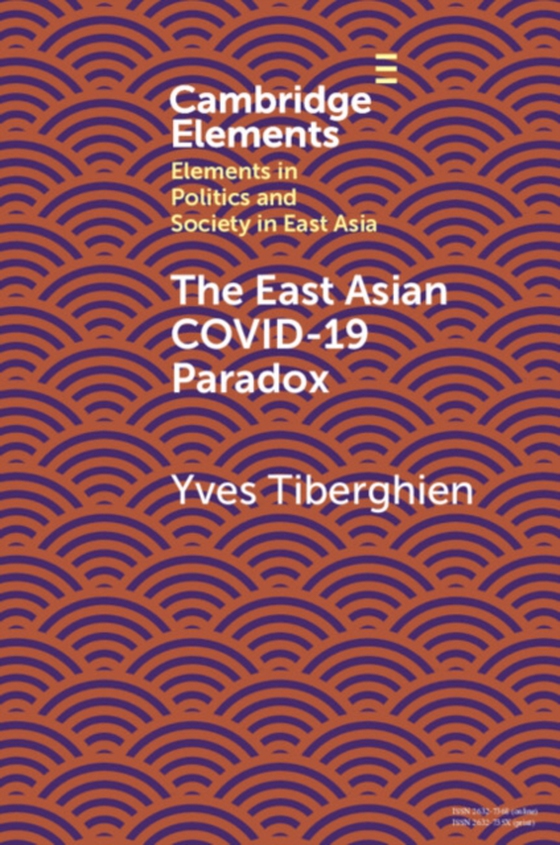
The Covid-19 pandemic triggered the first global public health emergency since 1918, the greatest economic crisis since the Great Depression, and the greatest geopolitical tensions in decades. Global governance mechanisms failed. Yet, East Asian countries (with caveats) managed to control Covid-19 better than most other countries and to increase their cooperation toward economic integration, despite their position on the security frontline. What explains this East Asian Covid paradox in a region devoid of strong regional institutions? This Element argues that high levels of institutional preparation, social cohesion, and global strategic reinforcement in a context of situational convergence explain the results. It relies on high-level interviews and case studies across the region.
E-bog
165,78 DKK
Forlag
Cambridge University Press
Udgivet
10.03.2022
Genrer
Political structure and processes
Sprog
English
Format
epub
Beskyttelse
LCP
ISBN
9781108968478
The Covid-19 pandemic triggered the first global public health emergency since 1918, the greatest economic crisis since the Great Depression, and the greatest geopolitical tensions in decades. Global governance mechanisms failed. Yet, East Asian countries (with caveats) managed to control Covid-19 better than most other countries and to increase their cooperation toward economic integration, despite their position on the security frontline. What explains this East Asian Covid paradox in a region devoid of strong regional institutions? This Element argues that high levels of institutional preparation, social cohesion, and global strategic reinforcement in a context of situational convergence explain the results. It relies on high-level interviews and case studies across the region.