 Dansk
Dansk


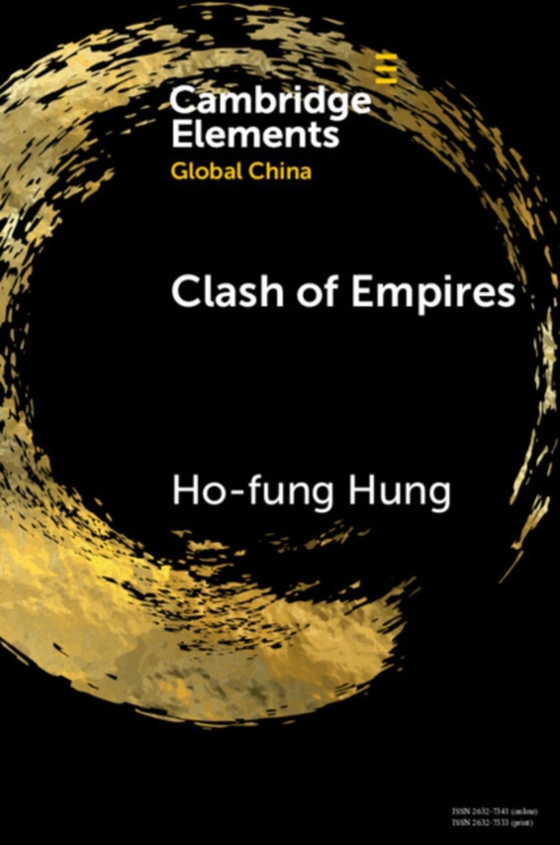
Hung, Ho-fung
(forfatter)
Clash of Empires e-bog
165,78 DKK
Many believe the recent deterioration in US-China relations represents a 'New Cold War' rooted in ideological differences. However, such differences did not prevent the two countries from pursuing economic integration and geopolitical cooperation in the 1990s and 2000s. Ho-fung Hung argues that what underlies the change in US-China relations is the changing relationship between US-China corporati…
Many believe the recent deterioration in US-China relations represents a 'New Cold War' rooted in ideological differences. However, such differences did not prevent the two countries from pursuing economic integration and geopolitical cooperation in the 1990s and 2000s. Ho-fung Hung argues that what underlies the change in US-China relations is the changing relationship between US-China corporations. Following China's slowdown after 2010, state-backed Chinese corporations turned increasingly aggressive when they expanded in both domestic and global markets. This was at the expense of US corporations, who then halted their previously intense lobbying for China in Washington. Simultaneously, China's export of industrial overcapacity has provoked geopolitical competition with the United States. The resulting dynamic, Hung argues, resembles interimperial rivalry among the great powers at the turn of the twentieth century.
E-bog
165,78 DKK
Forlag
Cambridge University Press
Udgivet
05.05.2022
Genrer
Constitution: government and the state
Sprog
English
Format
epub
Beskyttelse
LCP
ISBN
9781108901260
Many believe the recent deterioration in US-China relations represents a 'New Cold War' rooted in ideological differences. However, such differences did not prevent the two countries from pursuing economic integration and geopolitical cooperation in the 1990s and 2000s. Ho-fung Hung argues that what underlies the change in US-China relations is the changing relationship between US-China corporations. Following China's slowdown after 2010, state-backed Chinese corporations turned increasingly aggressive when they expanded in both domestic and global markets. This was at the expense of US corporations, who then halted their previously intense lobbying for China in Washington. Simultaneously, China's export of industrial overcapacity has provoked geopolitical competition with the United States. The resulting dynamic, Hung argues, resembles interimperial rivalry among the great powers at the turn of the twentieth century.