 Dansk
Dansk


Kolb, Robert
(redaktør)
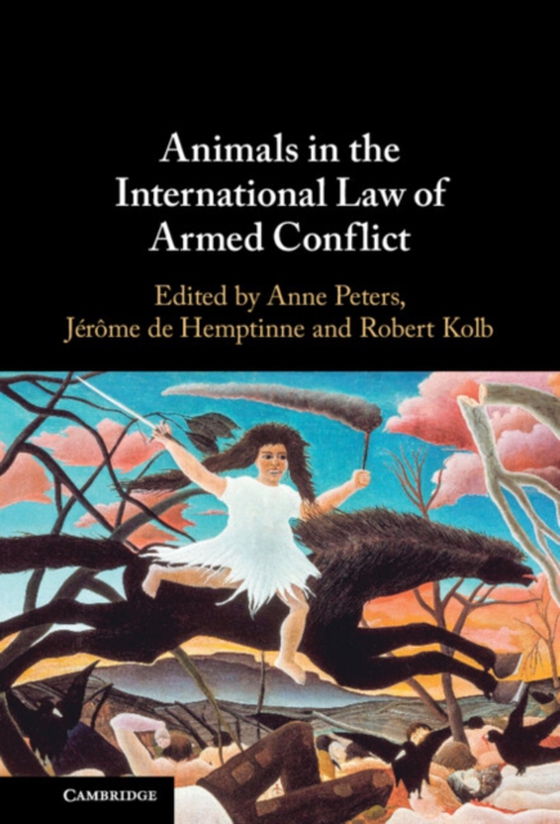
Animals in the International Law of Armed Conflict e-bog
948,41 DKK
Animals are the unknown victims of armed conflicts. Wildlife populations usually decline during warfare, with disastrous repercussions on the food chain, on fragile ecosystems and precarious habitats. Belligerents take advantage of the chaos of war for poaching and trafficking of animal products. Livestock, companion, and zoo animals, highly dependent on human care, are direct victims of hostilit…
Animals are the unknown victims of armed conflicts. Wildlife populations usually decline during warfare, with disastrous repercussions on the food chain, on fragile ecosystems and precarious habitats. Belligerents take advantage of the chaos of war for poaching and trafficking of animal products. Livestock, companion, and zoo animals, highly dependent on human care, are direct victims of hostilities. The book is the first legal analysis of these issues. It maps the framework of international humanitarian law, examining which and how the concepts, principles, and rationales can be applied and adapted for a better protection of animals. The contributions inter alia discuss precautions for animal civilians, problems of animal combatants and prisoners, a specific status for veterinarian personnel, the recognition of biodiversity hotspots as specially protected zones, and the potential of enforcement mechanisms. The concluding chapter draws together novel interpretations and reform proposals.
E-bog
948,41 DKK
Forlag
Cambridge University Press
Udgivet
06.10.2022
Genrer
Human rights, civil rights
Sprog
English
Format
epub
Beskyttelse
LCP
ISBN
9781009076661
Animals are the unknown victims of armed conflicts. Wildlife populations usually decline during warfare, with disastrous repercussions on the food chain, on fragile ecosystems and precarious habitats. Belligerents take advantage of the chaos of war for poaching and trafficking of animal products. Livestock, companion, and zoo animals, highly dependent on human care, are direct victims of hostilities. The book is the first legal analysis of these issues. It maps the framework of international humanitarian law, examining which and how the concepts, principles, and rationales can be applied and adapted for a better protection of animals. The contributions inter alia discuss precautions for animal civilians, problems of animal combatants and prisoners, a specific status for veterinarian personnel, the recognition of biodiversity hotspots as specially protected zones, and the potential of enforcement mechanisms. The concluding chapter draws together novel interpretations and reform proposals.