 Dansk
Dansk


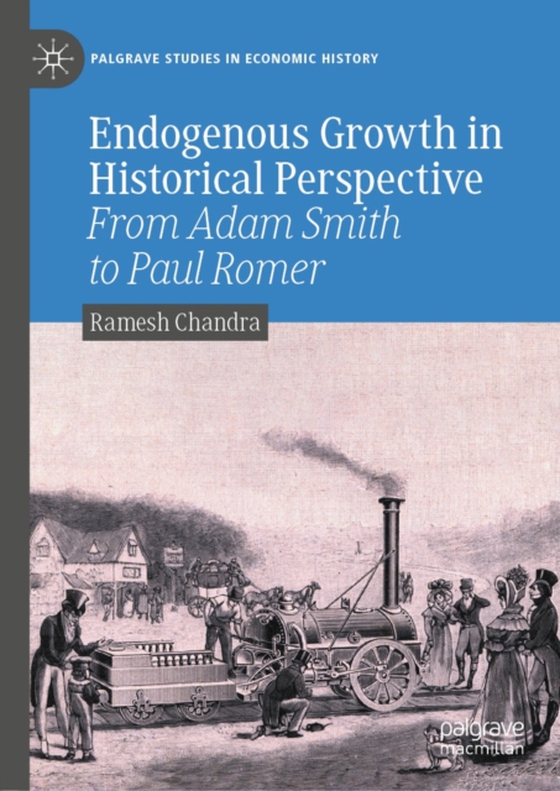
Endogenous Growth in Historical Perspective e-bog
458,50 DKK
(ekskl. moms 366,80 DKK)
In recent decades, new endogenous growth theory has become popular but the ideas are not new. They go back at least as far as Adam Smith, and the subsequent contributions made notably by Alfred Marshall and Allyn Young. This book critically discusses and provides an historical perspective to the entire spectrum of endogenous growth theories starting with Adam Smith and ending with Paul Romer.&nbs…
In recent decades, new endogenous growth theory has become popular but the ideas are not new. They go back at least as far as Adam Smith, and the subsequent contributions made notably by Alfred Marshall and Allyn Young. This book critically discusses and provides an historical perspective to the entire spectrum of endogenous growth theories starting with Adam Smith and ending with Paul Romer. It fills an important gap in the literature. While contributions of individual authors are readily available, there is no comprehensive study on the subject covering such a vast ground, critically discussing these authors in a comprehensive framework. It collates all the arguments and economic viewpoints in one collection, providing both the seasoned economist and a graduate economist with a critical comparison of origin, mechanisms, conclusions, and policy implications of these models.
E-bog
458,50 DKK
Forlag
Palgrave Macmillan
Udgivet
24.11.2021
Genrer
Economic theory and philosophy
Sprog
English
Format
epub
Beskyttelse
LCP
ISBN
9783030837617
In recent decades, new endogenous growth theory has become popular but the ideas are not new. They go back at least as far as Adam Smith, and the subsequent contributions made notably by Alfred Marshall and Allyn Young. This book critically discusses and provides an historical perspective to the entire spectrum of endogenous growth theories starting with Adam Smith and ending with Paul Romer. It fills an important gap in the literature. While contributions of individual authors are readily available, there is no comprehensive study on the subject covering such a vast ground, critically discussing these authors in a comprehensive framework. It collates all the arguments and economic viewpoints in one collection, providing both the seasoned economist and a graduate economist with a critical comparison of origin, mechanisms, conclusions, and policy implications of these models.