 Dansk
Dansk


Newlands, Nathaniel K
(forfatter)
Future Sustainable Ecosystems e-bog
403,64 DKK
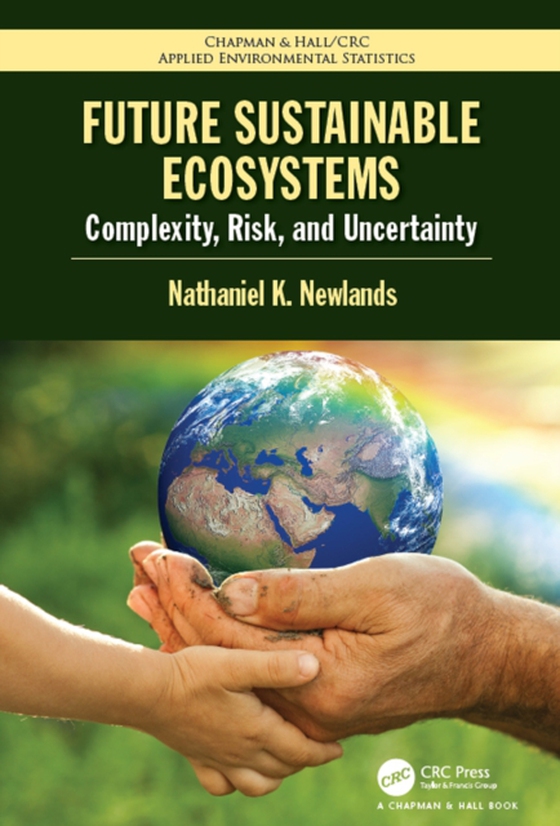
Future Sustainable Ecosystems: Complexity, Risk, Uncertainty provides an interdisciplinary, integrative overview of environmental problem-solving using statistics. It shows how statistics can be used to solve diverse environmental and socio-economic problems involving food, water, energy scarcity, and climate change risks. It synthesizes interdisciplinary theory, concepts, definitions, models and…
Future Sustainable Ecosystems: Complexity, Risk, Uncertainty provides an interdisciplinary, integrative overview of environmental problem-solving using statistics. It shows how statistics can be used to solve diverse environmental and socio-economic problems involving food, water, energy scarcity, and climate change risks. It synthesizes interdisciplinary theory, concepts, definitions, models and findings involved in complex global sustainability problem-solving, making it an essential guide and reference. It includes real-world examples and applications making the book accessible to a broader interdisciplinary readership.Discussions include a broad, integrated perspective on sustainability, integrated risk, multi-scale changes and impacts taking place within ecosystems worldwide. State-of-the-art statistical techniques, including Bayesian hierarchical, spatio-temporal, agent-based and game-theoretic approaches are explored. The author then focuses on the real-world integration of observational and experimental data and its use within statistical models.
E-bog
403,64 DKK
Forlag
Chapman and Hall/CRC
Udgivet
03.10.2016
Længde
389 sider
Genrer
Agriculture, agribusiness and food production industries
Sprog
English
Format
pdf
Beskyttelse
LCP
ISBN
9781466582576
Future Sustainable Ecosystems: Complexity, Risk, Uncertainty provides an interdisciplinary, integrative overview of environmental problem-solving using statistics. It shows how statistics can be used to solve diverse environmental and socio-economic problems involving food, water, energy scarcity, and climate change risks. It synthesizes interdisciplinary theory, concepts, definitions, models and findings involved in complex global sustainability problem-solving, making it an essential guide and reference. It includes real-world examples and applications making the book accessible to a broader interdisciplinary readership.Discussions include a broad, integrated perspective on sustainability, integrated risk, multi-scale changes and impacts taking place within ecosystems worldwide. State-of-the-art statistical techniques, including Bayesian hierarchical, spatio-temporal, agent-based and game-theoretic approaches are explored. The author then focuses on the real-world integration of observational and experimental data and its use within statistical models.